Posted On: April 06, 2026
Posted By: KSNM DRIP
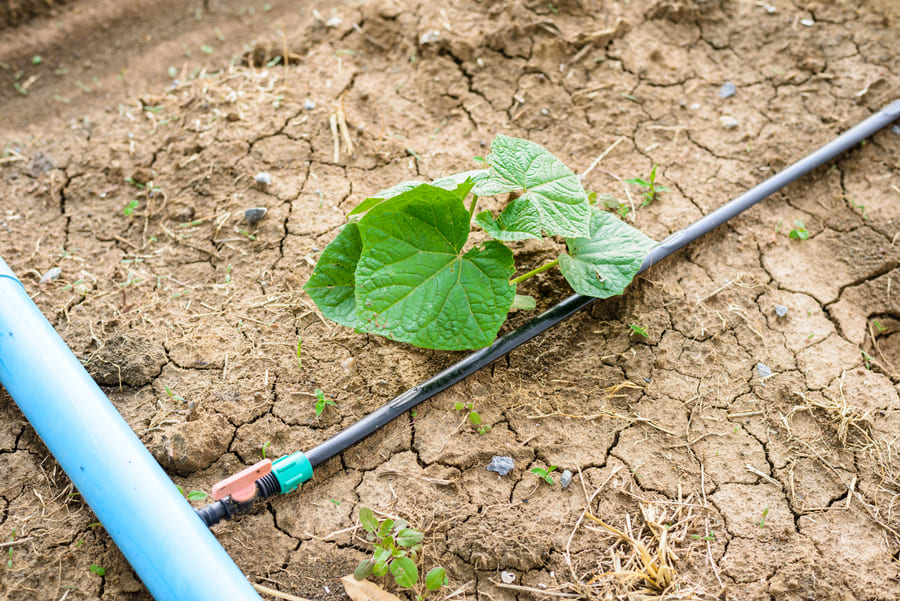
Drip irrigation failures often go unnoticed until yields drop. This blog explains the real causes behind system failure and how farmers can fix them for better efficiency and productivity.
Have you ever noticed your crops growing unevenly even when your system is running perfectly? That is one of the most common frustrations farmers face with drip irrigation.
The truth is simple. Drip irrigation fails mainly due to clogging, pressure imbalance, poor maintenance, and incorrect system design. These issues do not appear overnight. They build up slowly and impact your yield over time.
In this blog, you will learn why drip irrigation systems fail, how to identify the warning signs early, and how to fix them before they affect your farm productivity.
Drip irrigation often fails not because it stops working, but because it stops working efficiently.
At a glance, everything may look fine. Water is flowing, pumps are running, and fields appear irrigated. However, beneath the surface, water distribution may already be uneven. Some plants receive excess moisture while others are left under-irrigated. Over time, this imbalance leads to inconsistent crop growth and reduced yield.
Experts suggest that efficiency loss in drip irrigation can go unnoticed until yield drops significantly, making early detection critical for long-term success.
Clogging is one of the most common reasons drip irrigation systems fail.
Tiny particles like sand, silt, algae, and mineral deposits slowly accumulate inside emitters. Even with filtration systems in place, small impurities can pass through and settle over time. As a result, some drippers release less water or stop working completely.
Studies show that even partial clogging can significantly reduce water flow in affected lines, directly impacting plant health. This is why understanding clogging is crucial, as explained in The Silent Killer in Drip Irrigation, where hidden system issues are explored in detail.
Pressure imbalance is another major reason drip irrigation systems underperform.
In long fields or uneven terrains, water pressure naturally drops as it moves through pipelines. This means plants at the beginning of the line may receive more water than those at the end. While the system appears functional, the distribution is not uniform.
Experts suggest that maintaining consistent pressure is essential for proper irrigation. Without it, farmers may see patchy growth and inefficient water use across the field.
Yes, improper system design is one of the most overlooked causes of drip irrigation failure.
When the layout does not match crop spacing, soil type, or field conditions, even a well-built system can perform poorly. For example, using the wrong dripper type or spacing can lead to overwatering in some areas and dryness in others.
This is why understanding emitter selection is important. In Different Types of Drippers You Can Use for Your Farm, the importance of choosing the right dripper for different crops and conditions is explained clearly.
Drip irrigation systems are efficient only when maintained regularly.
Over time, filters clog, pipelines accumulate residue, and system components lose efficiency. Without routine flushing and inspection, these small issues gradually reduce system performance.
Experts suggest that regular maintenance helps retain system efficiency and extend its lifespan. If you want to understand system performance better, Precision Irrigation for Beginners: What It Is and How It Works provides useful insights into maintaining efficiency.
Fixing drip irrigation issues starts with awareness and consistency.
Regular flushing of pipelines, proper filtration, and pressure monitoring ensure uniform water distribution. Choosing the right components and maintaining them properly also plays a key role in long-term performance.
Modern solutions are also helping farmers manage irrigation better. In Use of IoT and AI in Drip Irrigation Systems, you can see how technology is making it easier to detect issues early and prevent system failure.
Drip irrigation is one of the most effective methods in modern farming, but it requires proper management to deliver consistent results.
Failures do not happen suddenly. They develop slowly through clogging, pressure imbalance, poor design, and lack of maintenance. Recognizing these issues early can help prevent yield loss and improve efficiency.
With the right approach, drip irrigation can continue to provide uniform water distribution, healthier crops, and better productivity. The key is not just installing the system, but ensuring it performs efficiently every single day.





 Drum Seeder and Cono...
September 02, 2026
Drum Seeder and Cono...
September 02, 2026
 Jasmine and Marigold...
August 27, 2026
Jasmine and Marigold...
August 27, 2026
 Understanding KSNM's...
August 20, 2026
Understanding KSNM's...
August 20, 2026
 Water Crisis 2026: W...
August 06, 2026
Water Crisis 2026: W...
August 06, 2026
 Cotton Drip Irrigati...
August 13, 2026
Cotton Drip Irrigati...
August 13, 2026

Introducing KSNM Drip’s Mobile App
Through our app’s convenience, start enjoying easy access, better experience and simple payment process. Download our App and begin your cart buying right away.


 Special offer!
 Track Order