Posted On: March 11, 2026
Posted By: KSNM Admin
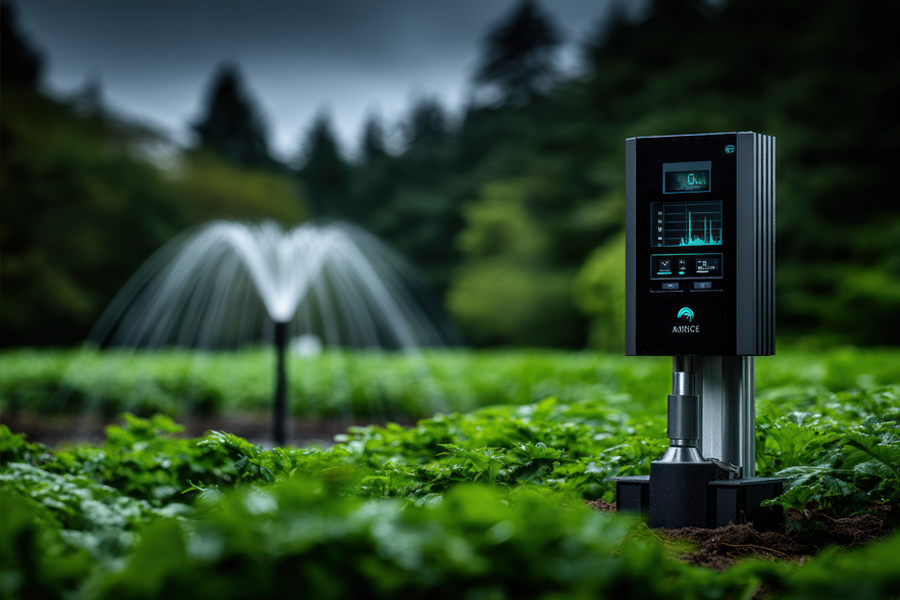
IoT and AI are transforming drip irrigation from a passive watering method into a dynamic, data-driven system. This guide breaks down how smart technology is helping farmers use less water, grow more, and make smarter decisions in real time.
Have you ever wondered what it would look like if your farm could think for itself? Not in a science fiction sense, but in a practical, day-to-day way where your irrigation system knows when the soil is dry, checks the weather forecast, and adjusts water flow before you even reach for your phone. That is exactly what IoT and AI are making possible in drip irrigation systems today. Across farms in India and around the world, smart irrigation technology is shifting from a luxury feature to a genuine necessity. This article breaks down how these technologies work, why they matter, and what they mean for the future of water-efficient farming.
The term "smart irrigation" gets used a lot, but it is worth pausing to understand what it actually means in practice. At its core, a smart drip irrigation system is one that collects real-world data from the field, processes that data intelligently, and then acts on it automatically or presents it to the farmer in a way that supports faster, better decisions. The three building blocks that make this possible are sensors, connectivity, and intelligence. Sensors gather information from the soil, the atmosphere, and the crop itself. Connectivity, powered by IoT, transmits that information to a central platform in real time. And artificial intelligence interprets the data to generate recommendations or trigger automatic responses within the drip irrigation network.
What makes this combination genuinely powerful is not any one of these elements in isolation. It is the way they work together. A soil moisture sensor on its own tells you that a patch of ground is dry. But when that sensor is connected to an AI platform that also knows the crop type, the growth stage, the weather forecast for the next 72 hours, and the historical water use patterns for that field, it can tell you something far more valuable: exactly how much water to release, to which zones, and at what time. That is the difference between data and intelligence, and it is the difference that modern drip irrigation technology is now delivering.
IoT, or the Internet of Things, is the backbone that makes smart drip irrigation possible. In practical terms, it refers to a network of physical devices planted across your field, including soil moisture probes, flow meters, pressure sensors, and weather stations, all transmitting data wirelessly to a cloud-based platform accessible from your phone or computer. For farmers managing large or spread-out landholdings, this connectivity is a fundamental shift in how they relate to their fields.
Consider a grower managing a multi-acre vegetable farm across varied terrain. In the past, ensuring even water distribution across the entire field required manual inspection, guesswork, and frequent adjustments. With an IoT-enabled drip irrigation system, every zone of that farm reports its status continuously. The farmer can see at a glance which areas need attention, where pressure is dropping in the pipe network, and whether any emitters are showing signs of blockage or failure. Speaking of blockage, clogging remains one of the most underestimated threats to drip system performance. If you have not yet read about the silent killer in drip irrigation, it is a genuinely useful read that puts a name to a problem many farmers encounter but rarely diagnose correctly.
Beyond monitoring, IoT connectivity also enables automation. Flow control valves can be triggered remotely or set to respond automatically to sensor thresholds, meaning the drip irrigation system can essentially manage routine watering cycles on its own while alerting the farmer only when something falls outside expected parameters.
If IoT is the nervous system of a smart irrigation setup, then artificial intelligence is the brain. AI platforms designed for precision agriculture do not simply respond to current conditions. They learn from them. Over time, an AI system managing a drip irrigation network builds up a detailed picture of how a specific field behaves across different seasons, crop cycles, and weather patterns. That accumulated knowledge allows it to make increasingly accurate predictions about what a crop will need before any visible stress appears.
One of the most practical applications of AI in drip irrigation is predictive scheduling. Rather than watering on a fixed daily or weekly calendar, AI-driven systems calculate an optimal irrigation schedule by weighing current soil moisture levels against evapotranspiration rates, upcoming weather forecasts, and the specific water demand curve of the crop at its current growth stage. Research published by the Food and Agriculture Organization has found that predictive irrigation scheduling can reduce water use by 30 to 50% compared to conventional schedule-based approaches, without any reduction in yield. For farmers in water-scarce regions of India, that kind of efficiency is not just economically attractive. It can be the difference between a viable season and a failed one.
AI is also proving its value in a less visible but equally important area: keeping the drip irrigation system itself in good working order. Machine learning models trained on pressure and flow data can identify patterns that indicate a developing problem, such as a partially blocked emitter, a micro-leak in the pipe network, or an underperforming filter, often before the issue becomes visible or causes crop damage. This kind of continuous system health monitoring is particularly valuable for subsurface drip setups where physical inspection is not straightforward. If you are interested in how underground irrigation is evolving alongside these smart systems, our piece on how subsurface irrigation is transforming agriculture globally covers that ground in detail.
This is one of the most important questions being asked in the drip irrigation space right now, and the answer in 2026 is far more encouraging than it was even three years ago. The cost of IoT sensors has dropped significantly as the technology has matured and scaled. Many AI-powered irrigation platforms now offer tiered pricing models designed specifically for small and mid-size farms, and several state governments across India have introduced subsidy schemes that cover a portion of the cost of smart irrigation infrastructure.
The entry point for a basic IoT-enabled drip irrigation setup, including soil sensors, a wireless gateway, and access to a cloud monitoring dashboard, is now within reach for farms of five acres and above in most Indian states. For farmers who are newer to precision irrigation technology, working with an experienced supplier makes a significant difference in getting the setup right from the start. KSNM Drip supports growers through that process, combining quality drip irrigation products with guidance on system design that suits the specific crop, soil, and field layout involved.
IoT and AI are not replacing the farmer. They are giving the farmer better information, faster responses, and smarter tools to work with. Drip irrigation has always been one of the most efficient ways to deliver water to crops, and smart technology is now making it more precise, more responsive, and more sustainable than it has ever been. Whether you are managing a small plot or a large commercial operation, the direction of travel is clear. The farms that adopt these tools thoughtfully and early are the ones that will use less water, face fewer system failures, and grow better crops over the long run. If you are ready to take that next step, now is the time to ask the right questions and find the right partners to help you get there.





 How to Choose Betwee...
October 08, 2026
How to Choose Betwee...
October 08, 2026
 Two Decades of KSNM ...
September 02, 2026
Two Decades of KSNM ...
September 02, 2026
 Tomato Drip Irrigati...
September 02, 2026
Tomato Drip Irrigati...
September 02, 2026
 Filters in Drip Irri...
September 02, 2026
Filters in Drip Irri...
September 02, 2026
 Drum Seeder and Cono...
September 02, 2026
Drum Seeder and Cono...
September 02, 2026
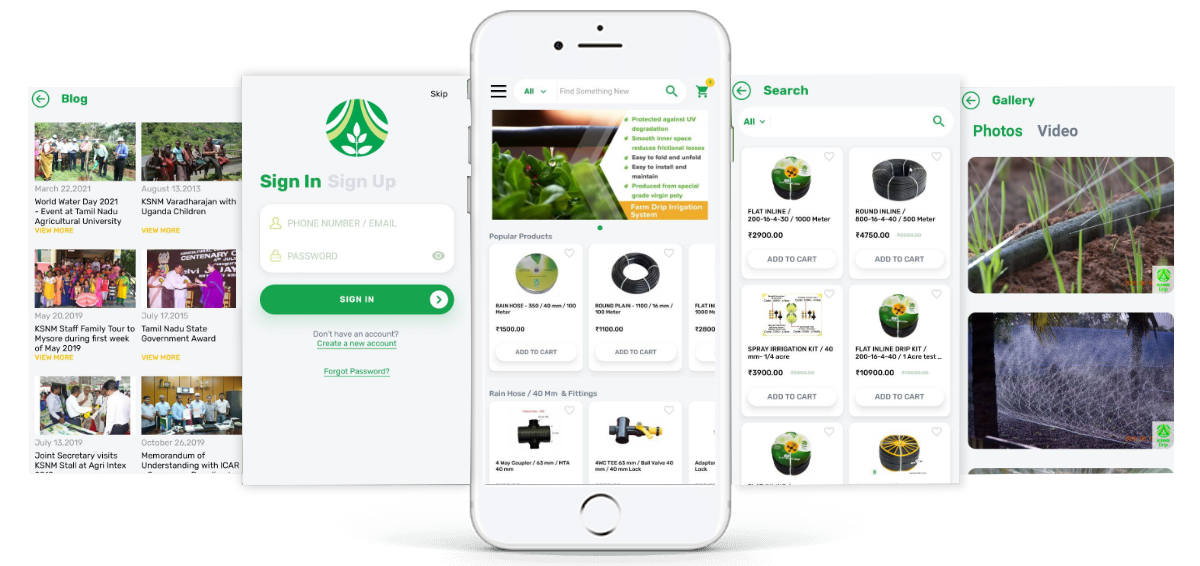
Introducing KSNM Drip’s Mobile App
Through our app’s convenience, start enjoying easy access, better experience and simple payment process. Download our App and begin your cart buying right away.


 Special offer!
 Track Order