Posted On: March 27, 2026
Posted By: KSNM Admin
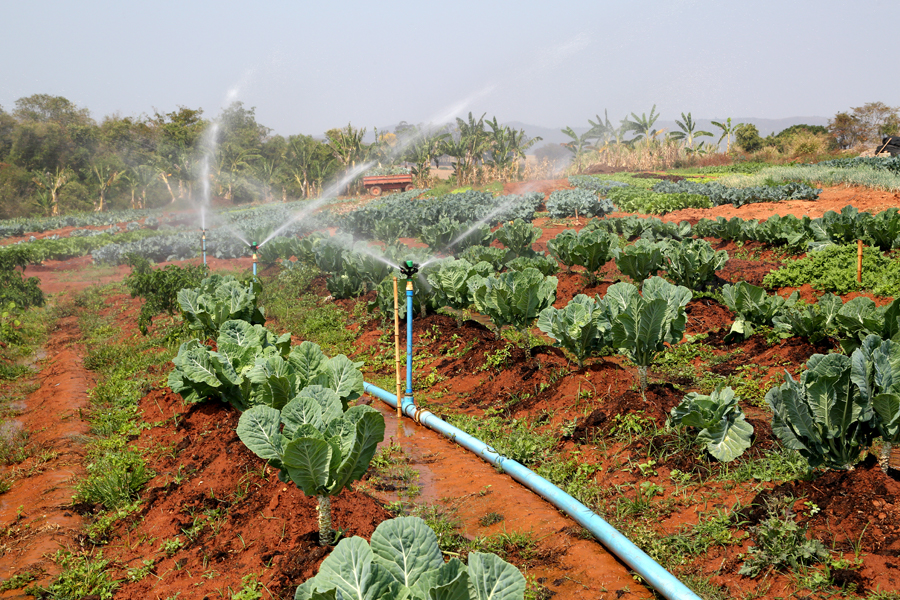
India's drip irrigation market is expanding rapidly in 2026, driven by government subsidies, smarter technology, and growing water scarcity. This guide unpacks the key trends shaping adoption, investment, and innovation across the country's farming landscape.
Here is a number that should stop you in your tracks. India holds about 4% of the world's freshwater resources but supports nearly 18% of the global population. That gap between supply and demand is not closing on its own, and agriculture, which accounts for roughly 80% of India's total water consumption, is where the pressure is felt most acutely. Drip irrigation has emerged as one of the most credible answers to that challenge, and in 2026 the Indian market for drip irrigation systems is not just growing, it is accelerating. Policy support, technological advancement, and a rapidly changing farming culture are all converging at once. This article breaks down exactly what is driving that momentum and what it means for farmers, suppliers, and the broader agricultural ecosystem across India.
To understand where the market is going, it helps to understand where it stands. India currently has one of the largest installed bases of micro-irrigation infrastructure in the world, yet penetration remains surprisingly low relative to the total irrigated area. According to data from the Ministry of Agriculture and Farmers Welfare, only around 10 to 12% of India's net irrigated area currently uses any form of micro-irrigation, which includes both drip and sprinkler systems. That figure tells two stories at once. It reflects how much progress has already been made, and it signals just how much headroom remains for further growth.
Market research projections for 2026 place the Indian drip irrigation industry on a strong upward curve, with compound annual growth rates estimated between 12 and 15% over the next several years. The drivers behind that growth are multiple and reinforcing. Government subsidies are making systems more affordable. Awareness among farmers is rising. Input costs for water and fertilizer are climbing, making efficient delivery systems more economically attractive. And the technology embedded in modern drip irrigation systems is becoming easier to use, more reliable, and more clearly linked to measurable yield improvements. All of these factors are working together to push adoption forward at a pace the market has not seen before.
No conversation about drip irrigation market trends in India is complete without a close look at government policy, because in this sector, policy is not just a backdrop. It is one of the primary engines of growth. The Pradhan Mantri Krishi Sinchayee Yojana, commonly known as PMKSY, remains the centerpiece of India's push toward water-efficient farming, and its Per Drop More Crop component specifically targets the expansion of micro-irrigation including drip systems across the country.
Under current PMKSY guidelines, small and marginal farmers can access subsidies of up to 55% on the cost of drip irrigation installation, while other farmer categories are eligible for subsidies of up to 45%. Several state governments layer additional incentives on top of the central subsidy, meaning that in states like Maharashtra, Gujarat, Andhra Pradesh, Karnataka, and Tamil Nadu, the effective out-of-pocket cost for a farmer installing a drip system can be reduced quite substantially. Tamil Nadu in particular has been aggressive in pushing drip irrigation adoption across its horticulture-heavy districts, with dedicated state schemes running in parallel with the central program.
The policy environment in 2026 also reflects a growing alignment between water conservation goals, agricultural productivity targets, and climate adaptation planning. Drip irrigation sits at the intersection of all three, which is one reason it continues to attract sustained and cross-departmental support at both the central and state levels. For farmers who have been sitting on the fence about making the investment, understanding the subsidy landscape is often the turning point.
The geography of drip irrigation adoption in India is not uniform, and understanding the regional picture gives a clearer sense of where the market is most active and where the next wave of growth is likely to come from. Maharashtra has historically been the largest market for drip irrigation in India, driven by its extensive sugarcane, grape, and pomegranate cultivation. Gujarat follows closely, with cotton, groundnut, and horticultural crops all showing strong drip adoption rates. Andhra Pradesh and Telangana have seen significant expansion in drip irrigation for chilli, turmeric, and banana cultivation, while Tamil Nadu continues to grow its installed base across a wide range of vegetable and fruit crops.
What is particularly interesting in 2026 is the trend toward drip irrigation adoption in crops that were traditionally considered unsuitable or impractical for drip systems. Row crops like maize, pulses, and even certain cereal varieties are increasingly being brought under drip irrigation as farmers recognize the yield and input efficiency benefits. This expansion into broader cropping systems is one of the more significant structural shifts in the Indian drip irrigation market this year, and it points to a future where drip is no longer seen as a specialty tool for horticulture but as a mainstream practice across Indian agriculture. If you want to understand how that shift is playing out in the field, our article on how drip irrigation is redefining row-crop farming goes into that transformation in considerable depth.
The Indian drip irrigation market in 2026 is not just growing in volume. It is growing in sophistication. Farmers and agribusinesses across the country are increasingly asking not just for drip systems but for smart drip systems, ones that integrate soil moisture sensors, automated controllers, and remote monitoring capabilities into a unified platform. This demand for technology-enabled irrigation is being driven partly by a younger generation of farmers who are comfortable with mobile apps and digital tools, and partly by a growing body of evidence showing that smart drip irrigation delivers meaningfully better outcomes than conventional timer-based setups.
Alongside the push toward smart systems, there is a notable trend toward fertigation-ready installations. Farmers who have already made the shift to drip irrigation are increasingly looking to add fertigation capability to their systems, recognizing that the combination of precise water delivery and targeted nutrient application delivers compounding benefits for both crop quality and input cost management. The two practices reinforce each other, and the market is responding with more integrated product offerings that make fertigation setup simpler and more accessible than it has historically been.
Another technology trend worth watching is the expansion of subsurface drip irrigation in India. While surface drip remains dominant, subsurface systems are gaining traction in crops and regions where surface evaporation losses are high, weed pressure from surface moisture is a concern, or long-term infrastructure investment is a priority. The performance advantages of subsurface drip, particularly in terms of water efficiency and reduced surface disruption, are well documented, and our detailed guide on how subsurface irrigation is transforming agriculture globally is a useful reference for anyone evaluating whether this approach fits their farming context.
Market growth is an abstract concept until you connect it to what it means for an individual farmer standing in a field trying to decide whether to invest in a drip irrigation system. What the current growth environment in India means practically is that there has never been more support, more product choice, more financing options, and more agronomic knowledge available to help farmers make that transition successfully. Competition among suppliers is driving quality improvements and price accessibility. Government programs are reducing the upfront cost barrier. And the community of farmers with drip irrigation experience is large enough that peer learning and reference visits are increasingly easy to arrange.
For farmers evaluating which supplier to work with, the quality of the product and the quality of the after-sales support are both critical. A drip irrigation system is a long-term infrastructure investment, and getting the design, installation, and ongoing maintenance right determines whether the system delivers on its promise over many seasons. KSNM Drip brings both reliable products and field-level expertise to that equation, supporting farmers through the process of selecting and setting up systems that are appropriate for their specific crops, soils, and water sources.
The drip irrigation market in India in 2026 is at an inflection point. The combination of policy support, rising water scarcity, advancing technology, and growing farmer awareness has created conditions where adoption is no longer a question of if but when and how. The trends are clear, the economics are increasingly favorable, and the agronomic case for drip irrigation across a widening range of crops and regions is stronger than it has ever been. Whether you are a farmer evaluating your first drip system, an agribusiness tracking where the market is heading, or a policymaker thinking about water security at scale, the direction of travel in this sector deserves your close attention. The farms that move early and move well will be the ones that define what Indian agriculture looks like a decade from now





 Drum Seeder and Cono...
September 02, 2026
Drum Seeder and Cono...
September 02, 2026
 Jasmine and Marigold...
August 27, 2026
Jasmine and Marigold...
August 27, 2026
 Understanding KSNM's...
August 20, 2026
Understanding KSNM's...
August 20, 2026
 Water Crisis 2026: W...
August 06, 2026
Water Crisis 2026: W...
August 06, 2026
 Cotton Drip Irrigati...
August 13, 2026
Cotton Drip Irrigati...
August 13, 2026
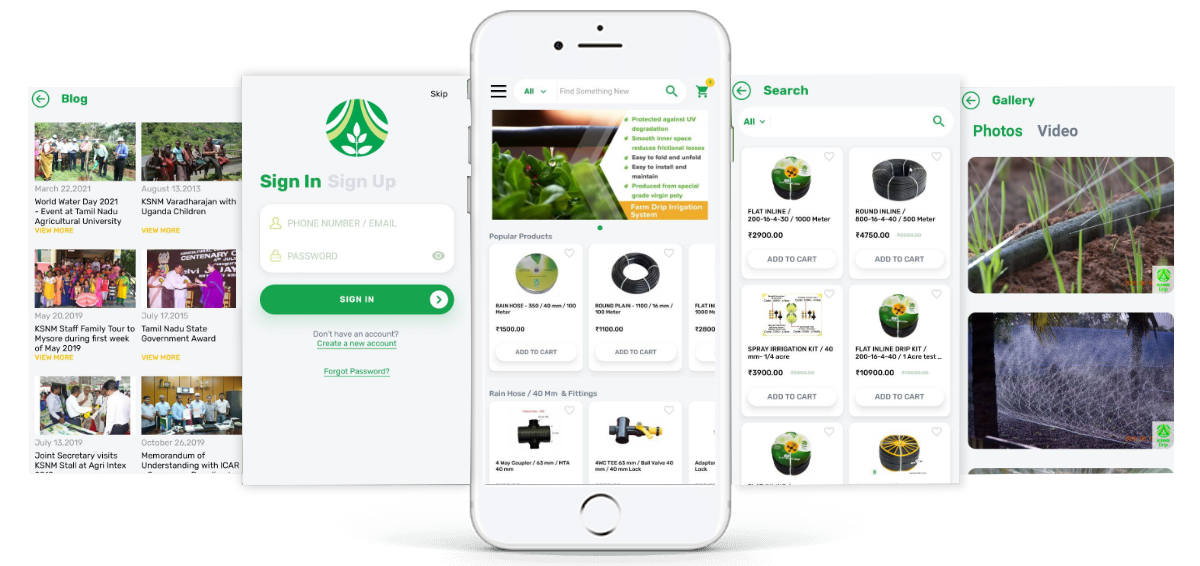
Introducing KSNM Drip’s Mobile App
Through our app’s convenience, start enjoying easy access, better experience and simple payment process. Download our App and begin your cart buying right away.


 Special offer!
 Track Order