Posted On: December 15, 2025
Posted By: KSNM DRIP
Choosing the right type of dripper is essential for building an efficient drip irrigation system. This blog breaks down the common dripper types used in farming and explains when to use each one, with natural references to KSNM’s reliable drip products.
If you’re planning to set up a drip irrigation system for your farm, you’ll quickly realize that choosing the right dripper is not always simple. From inline drippers to flat drippers and drip tapes, each design has its own purpose and understanding these differences can help you save water, reduce clogging, and improve your crop yield.
In this blog, we'll walk you through the different types of drippers commonly used in agriculture, explain how each one works, and help you identify which option might be the best fit for your crops.
A dripper (or emitter) is a small component in a drip irrigation system that controls how water comes out. Instead of rushing out like a tap, a dripper slows water down and delivers it drop by drop directly to the plant’s root zone. This targeted approach not only saves water but also prevents over-watering, one of the most common causes of crop stress. Without drippers, your irrigation line would simply gush water everywhere, which defeats the whole purpose of drip irrigation.
Drippers come in several designs, and each type serves a specific purpose depending on crop spacing, terrain, and water requirements. Choosing the right one ensures uniform watering and healthier plant growth.
Understanding drippers becomes easier when you know how they are grouped. A common question is “How are drippers classified?” Typically, they fall into two primary categories:
Installation method
Pressure Regulation
This classification focuses on how drippers are placed onto the lateral pipe in a drip irrigation system. Some are built into the pipe, while others are manually attached.
Inline drippers are built directly into the drip lateral during manufacturing. Since they’re pre-spaced at fixed intervals, they’re ideal for row crops planted in straight and uniform spacing. When you run your irrigation line through the field, each dripper naturally aligns with a plant, ensuring uniform delivery of water along the entire length. Inline drippers are commonly used for vegetables, sugarcane, turmeric, banana, floriculture, and crops requiring uniform moisture levels through drip irrigation. Their turbulent flow paths help reduce clogging and maintain steady discharge even across long distances.
Online drippers, often called button drippers, are installed on top of the lateral pipe using a punching tool. This allows you to position the dripper exactly where water is needed, making them perfect for crops with uneven spacing or individual watering needs.
They are widely used in orchards, coconut farms, vineyards, nurseries, potted plants, and polyhouses. If a single plant needs more water, you can simply add two or three online drippers to the same spot. This flexibility makes them one of the most versatile dripper options available.
This classification explains how drippers respond to pressure changes within the pipeline. Pressure directly affects water output, which is why this category is essential for achieving uniform drip irrigation.
Pressure-compensating drippers deliver the same amount of water regardless of pressure changes along the pipe. This makes them ideal for uneven terrain, slopes, and long lateral lengths, where regular drippers might deliver inconsistent flow. PC drippers maintain flow uniformity through an internal diaphragm that adjusts to pressure variations. They’re commonly used in high-value crops, orchards, polyhouses, and hilly regions requiring precise drip irrigation control.
These drippers are cost-effective and work best for farms with flat terrain where water pressure stays mostly uniform. Their discharge rate varies slightly with pressure, which is acceptable in open fields with even land conditions. They’re frequently used for vegetables, flowers, nurseries, and general agricultural drip irrigation systems where simple and affordable solutions are preferred. Products like Standard Online Dripper or non-PC drippers with turbulent flow paths fall into this category.
Some drippers offer additional features to enhance performance, reduce clogging, or support specific drip irrigation techniques.
Adjustable drippers allow manual control of water discharge by rotating the cap. They are especially useful in nurseries, gardens, landscaping, and grow bags where each plant may have different water needs. With adjustable drippers, farmers can fine-tune their drip irrigation system to deliver light moisture for delicate plants or higher flow for larger shrubs and bag-grown crops.
Designed to prevent soil and dirt from being sucked back into the dripper when the system stops, a common issue in subsurface drip irrigation. AS drippers are highly recommended for buried systems in sandy soils or sugarcane fields, where maintaining clean water pathways is crucial for long-term drip irrigation efficiency.
These drippers stay closed until the water pressure reaches a set level. Once the pressure drops, they shut off immediately, preventing the lateral from draining. This makes them ideal for greenhouses, pulse irrigation, and potted plant arrangements where stable pressure ensures consistent operation.
These drippers force water through a winding internal path. The turbulence keeps particles suspended, reducing clogging, and improving performance in fields with moderate filtration. Many inline products, such as long-path flat inline laterals use this mechanism, for reliable water flow in challenging drip irrigation conditions.
Here are the crisp and effective answers for the top 5 frequently asked questions about drippers:
PC (Pressure Compensating): Choose this for slopes or very long lines. It keeps the water flow the same for every plant, even with pressure changes.
Non-PC: Choose this for short lines and flat ground. It's cheaper, but the flow rate will change if the water pressure changes.
Inline: Drippers are built inside the tube at fixed distances. Use for straight row crops (e.g., vegetables).
Online: Drippers are punched into the tube wherever you need them. Use for trees, shrubs, or irregular gardens.
Sandy Soil: Use a high flow rate. The water drains fast, so you need a lot of water quickly.
Clay Soil: Use a low flow rate. Water drains slowly, so a slow rate prevents runoff.
The number is limited by your pipe size. Too many drippers causes low pressure at the end of the line. Check your tubing's maximum flow capacity (usually listed by the manufacturer).
Cause: Tiny particles (sand, dirt) or biological slime entering the dripper.
Conclusion
Choosing the right dripper is one of the most important decisions when setting up a reliable drip irrigation system. Each type serves a unique purpose based on crop requirements, field layout, and water conditions. By understanding how drippers are classified and how they function you can design systems that deliver water more efficiently, reduce clogging, and improve overall crop performance.





 Drum Seeder and Cono...
September 02, 2026
Drum Seeder and Cono...
September 02, 2026
 Jasmine and Marigold...
August 27, 2026
Jasmine and Marigold...
August 27, 2026
 Understanding KSNM's...
August 20, 2026
Understanding KSNM's...
August 20, 2026
 Water Crisis 2026: W...
August 06, 2026
Water Crisis 2026: W...
August 06, 2026
 Cotton Drip Irrigati...
August 13, 2026
Cotton Drip Irrigati...
August 13, 2026
Introducing KSNM Drip’s Mobile App
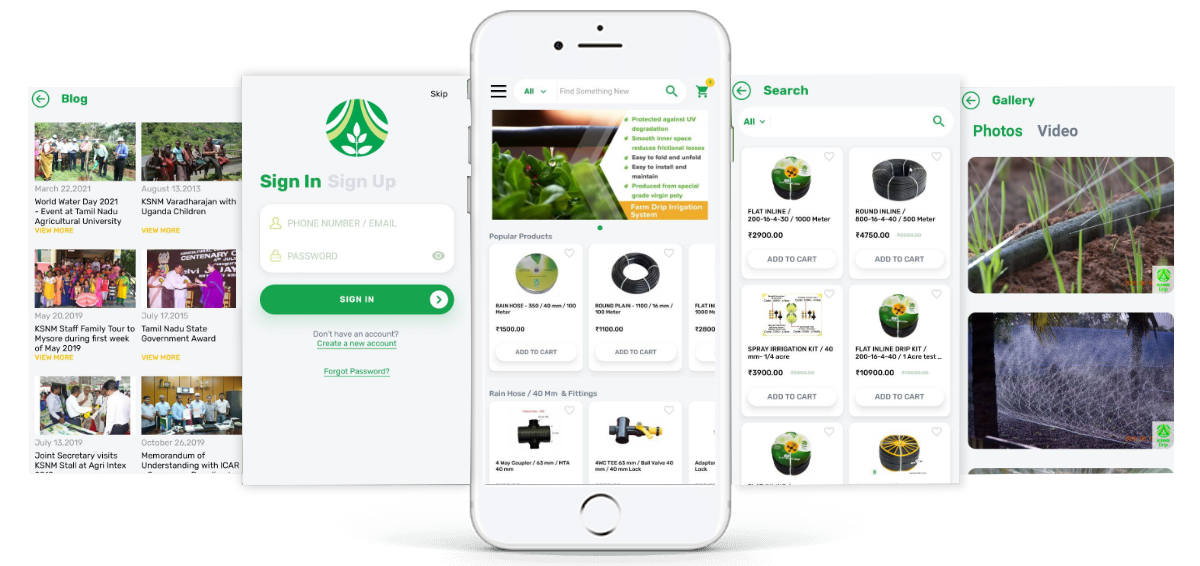
Through our app’s convenience, start enjoying easy access, better experience and simple payment process. Download our App and begin your cart buying right away.


 Special offer!
 Track Order