Posted On: April 20, 2026
Posted By: KSNM DRIP
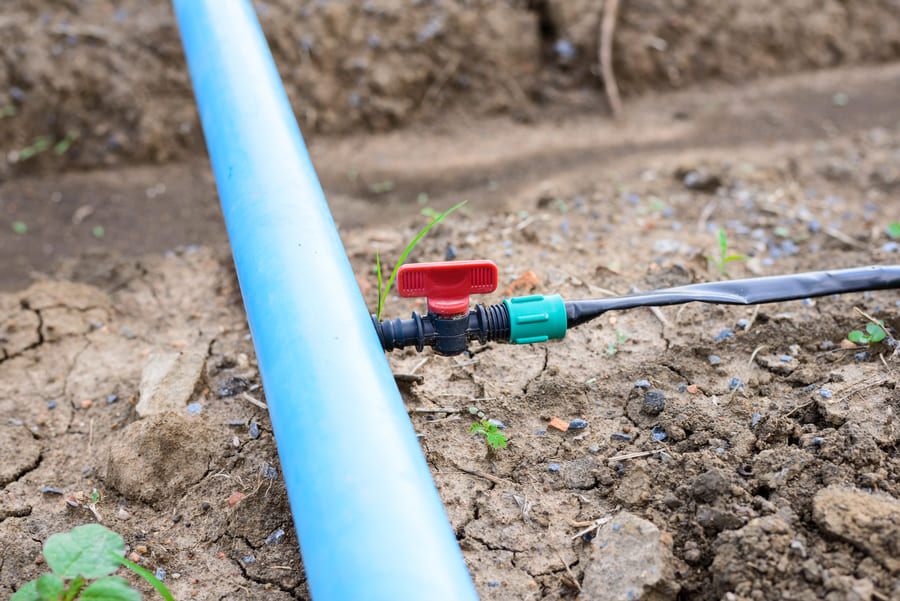
Hard water and clogging can silently reduce drip irrigation efficiency. This blog explains why it happens and how farmers can prevent and fix these issues to maintain uniform water flow and improve crop performance.
Have you ever wondered why your crops are not growing evenly even though your drip irrigation system is running daily? The answer often lies in something you cannot see.
Drip irrigation systems commonly fail due to hard water deposits and clogging inside emitters. These blockages reduce water flow and disrupt uniform irrigation.
Hard water contains minerals like calcium and magnesium that slowly build up inside pipes and drippers. Over time, this affects performance and reduces efficiency. In this blog, you will learn how clogging happens, how to identify it early, and how to fix it effectively to protect your crops and yield.
Hard water affects drip irrigation by leaving behind mineral deposits that block water flow.
When water with high mineral content flows through the system, it carries dissolved salts such as calcium carbonate. As water evaporates or slows down inside emitters, these minerals settle and form scale deposits. Over time, this buildup narrows the flow path and reduces discharge.
Experts suggest that even small mineral deposits can significantly reduce emitter efficiency. This makes hard water one of the most common hidden threats in drip irrigation systems, especially in regions where groundwater is the primary source.
Clogging develops gradually due to a combination of physical, chemical, and biological factors.
Fine particles like sand and silt enter the system through water sources. At the same time, chemical deposits from hard water begin to accumulate. In some cases, organic growth such as algae or bacteria adds another layer of blockage inside emitters.
Studies show that clogging rarely happens instantly. Instead, it builds slowly, making it difficult to detect in the early stages. This is why many farmers only notice the problem when crop growth becomes uneven. A deeper understanding of this issue is explained in The Silent Killer in Drip Irrigation, where hidden system failures are discussed in detail.
Clogging in drip irrigation can be identified through uneven crop growth and inconsistent soil moisture.
When some plants appear healthy while others remain weak, it often indicates that water distribution is not uniform. Another sign is reduced water discharge at certain emitters compared to others along the same line.
Experts suggest regularly checking flow rates and observing crop patterns to detect early signs. Early identification helps prevent larger system failure and avoids yield loss.
Preventing clogging in drip irrigation starts with proper filtration and water treatment.
Filters play a critical role in removing physical particles before water enters the system. However, for hard water, filtration alone is not enough. Chemical treatment methods such as acid flushing help dissolve mineral deposits and keep emitters clean.
According to agricultural experts, maintaining proper water quality can improve system efficiency significantly. For a broader understanding of system efficiency, Precision Irrigation for Beginners: What It Is and How It Works explains how maintaining consistency is key to long-term performance.
Fixing clogged drip irrigation systems requires cleaning both physical and chemical blockages.
Flushing the system with clean water helps remove loose particles. For mineral buildup, acid treatment is commonly used to dissolve deposits inside pipes and emitters. In severe cases, replacing heavily clogged drippers may be necessary.
Experts suggest that regular cleaning schedules prevent recurring issues. Combining flushing with proper maintenance ensures that water flows uniformly across the field.
Yes, system design plays a major role in how easily clogging occurs.
Improper pipe layout, incorrect dripper selection, or uneven pressure distribution can increase the chances of clogging. For example, low-pressure zones may allow particles to settle faster, leading to blockage.
Choosing the right components and layout reduces these risks. In Different Types of Drippers You Can Use for Your Farm, the importance of selecting suitable emitters for different conditions is explained clearly.
Conclusion
Drip irrigation is a powerful system, but its efficiency depends on how well it is maintained. Hard water and clogging are common challenges that can silently reduce performance and affect crop growth.
By understanding how mineral deposits form and how clogging develops, farmers can take proactive steps to prevent these issues. Regular filtration, cleaning, and monitoring ensure that water reaches every plant evenly.
In the long run, maintaining your drip irrigation system properly is not just about fixing problems. It is about protecting your yield, saving water, and ensuring consistent farm productivity.





 Drum Seeder and Cono...
September 02, 2026
Drum Seeder and Cono...
September 02, 2026
 Jasmine and Marigold...
August 27, 2026
Jasmine and Marigold...
August 27, 2026
 Understanding KSNM's...
August 20, 2026
Understanding KSNM's...
August 20, 2026
 Water Crisis 2026: W...
August 06, 2026
Water Crisis 2026: W...
August 06, 2026
 Cotton Drip Irrigati...
August 13, 2026
Cotton Drip Irrigati...
August 13, 2026

Introducing KSNM Drip’s Mobile App
Through our app’s convenience, start enjoying easy access, better experience and simple payment process. Download our App and begin your cart buying right away.


 Special offer!
 Track Order