Posted On: April 13, 2026
Posted By: KSNM DRIP
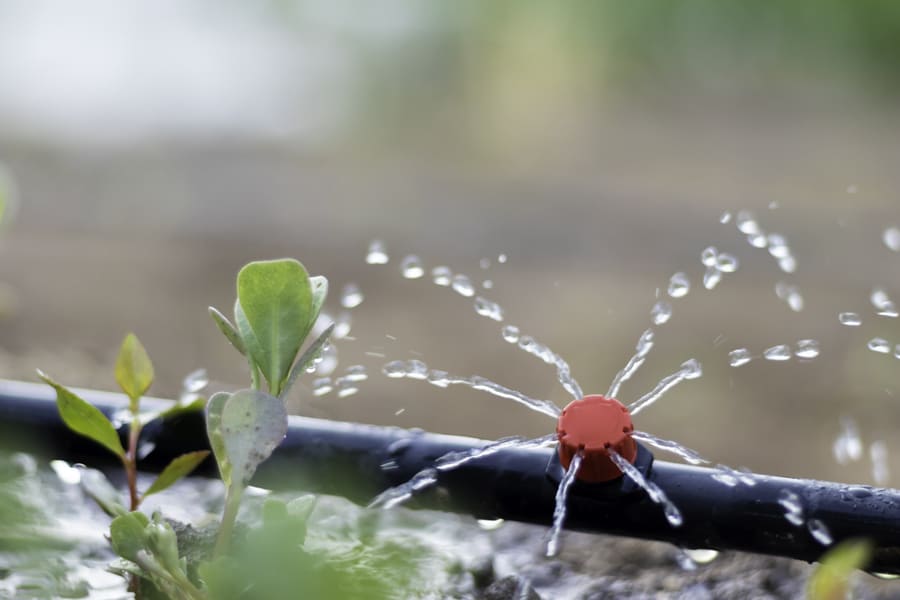
Choosing between drip and sprinkler irrigation can impact yield and water efficiency. This blog explains the key differences, benefits, and when to use each system for better farm performance.
If you are planning to upgrade your irrigation system, one question always comes up first. Should you choose drip irrigation or sprinkler irrigation?
The simple answer is this. Drip irrigation is ideal for precision watering and water saving, while sprinkler systems are better for broader coverage. The right choice depends on your crop, soil, and farm conditions.
Many farmers today are shifting toward drip irrigation because of its efficiency and control. In this blog, you will understand the key differences between these two systems and how to choose the one that works best for your field.
Drip irrigation delivers water directly to the root zone, while sprinkler irrigation sprays water over the crop like rainfall.
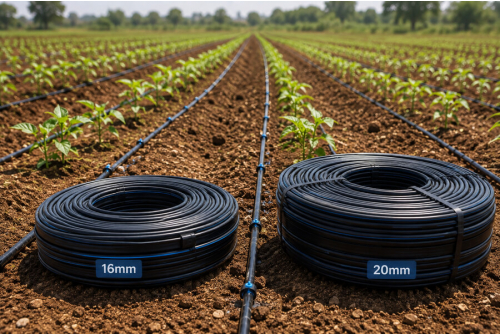
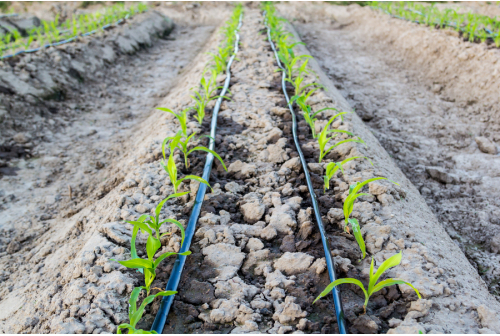
In drip irrigation, water flows slowly through pipes and emitters, reaching each plant precisely where it is needed. This reduces water loss and ensures consistent moisture. Systems built using solutions like Flat Inline & Fittings / 16 mm or Round Inline & Fittings / 16 mm help maintain this uniform flow across the entire field.
On the other hand, sprinkler systems distribute water over a larger area, which is useful for crops that require full-field coverage. Experts suggest that drip irrigation can save up to 40 to 60 percent more water compared to traditional sprinkler methods, making it a preferred choice in water-scarce regions.
Drip irrigation should be used when precision, water efficiency, and crop-specific watering are important.
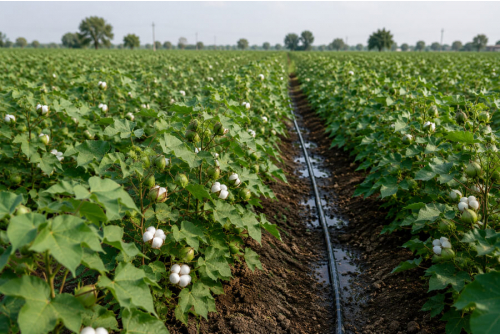
Crops like vegetables, fruits, sugarcane, and cotton benefit greatly from drip irrigation because they require controlled and consistent moisture. Drip systems ensure that water reaches the roots without wetting unnecessary areas, which helps reduce weed growth and improves nutrient absorption.
For example, using systems like Drip Tape & Fittings / 16 mm allows farmers to maintain uniform water delivery across closely spaced crops, ensuring every plant receives the same level of moisture. This is especially useful in modern farming where consistency directly impacts yield and profitability.
Sprinkler irrigation is suitable when crops need widespread water coverage or when fields are large and open.
For crops like grass, fodder, and certain cereals, sprinkler systems simulate natural rainfall and provide uniform coverage across the entire field. They are also useful during seed germination stages where surface moisture is important.
In some cases, products like Rain Hose / Rain Pipe can act as an alternative, offering broader coverage while still being more controlled than traditional sprinklers. However, studies show that sprinkler systems can lead to higher water loss due to evaporation and wind drift, making them less efficient compared to drip irrigation in hot and dry climates.
Drip irrigation is significantly more water-efficient than sprinkler irrigation.
In drip irrigation, water is delivered slowly and directly to the root zone, minimizing losses due to evaporation and runoff. This ensures that nearly every drop is used by the plant. In contrast, sprinkler systems lose a portion of water to wind, heat, and surface evaporation before it even reaches the soil.
Experts suggest that improving water efficiency is critical for sustainable farming. This is also discussed in Climate-Proof Agriculture: Drip Irrigation as the Answer to Water and Yield Challenges, where water-saving methods are explored in detail.
Drip irrigation is generally better for long-term efficiency, cost savings, and crop health.
While sprinkler systems may have a lower initial setup in some cases, drip irrigation offers better returns over time due to reduced water usage, improved yields, and lower labour requirements. It also supports fertigation, allowing nutrients to be delivered directly to plant roots.
With properly designed systems using components like Filters & Venturi, farmers can ensure clean water flow and efficient nutrient delivery, improving both system performance and crop growth.
The choice between drip irrigation and sprinkler irrigation depends on crop type, soil condition, water availability, and field layout.
If your goal is precision farming with minimal water wastage, drip irrigation is the better option. If you need quick coverage for large areas or specific crop stages, sprinklers can be useful.
Experts suggest evaluating long-term benefits rather than just initial cost. In many cases, farmers who switch to drip irrigation experience improved crop consistency and better resource management.
Choosing between drip irrigation and sprinkler irrigation is not just about watering crops. It is about improving efficiency, saving resources, and increasing yield.
Drip irrigation offers precision, water savings, and better crop performance, making it ideal for modern farming. Sprinkler systems still have their place, but their limitations in water efficiency cannot be ignored.
With advanced solutions like KSNM drip irrigation and its range of reliable products, farmers can move toward smarter and more sustainable irrigation practices. The right choice today can make a significant difference in your farm’s productivity tomorrow.





 Drum Seeder and Cono...
September 02, 2026
Drum Seeder and Cono...
September 02, 2026
 Jasmine and Marigold...
August 27, 2026
Jasmine and Marigold...
August 27, 2026
 Understanding KSNM's...
August 20, 2026
Understanding KSNM's...
August 20, 2026
 Water Crisis 2026: W...
August 06, 2026
Water Crisis 2026: W...
August 06, 2026
 Cotton Drip Irrigati...
August 13, 2026
Cotton Drip Irrigati...
August 13, 2026
Introducing KSNM Drip’s Mobile App
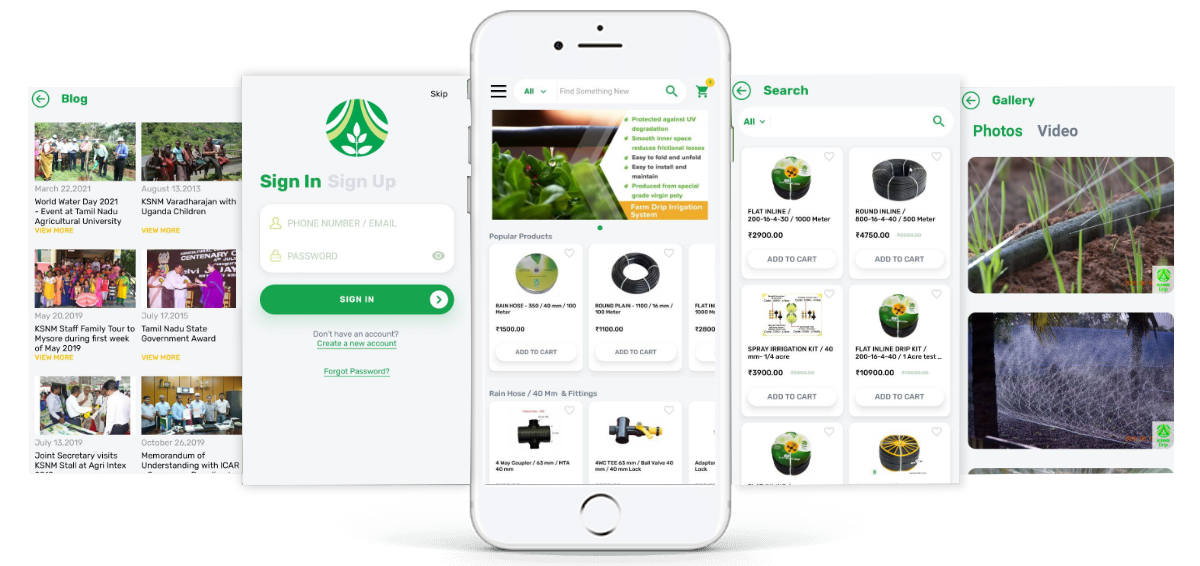
Through our app’s convenience, start enjoying easy access, better experience and simple payment process. Download our App and begin your cart buying right away.


 Special offer!
 Track Order