Posted On: April 04, 2026
Posted By: KSNM DRIP
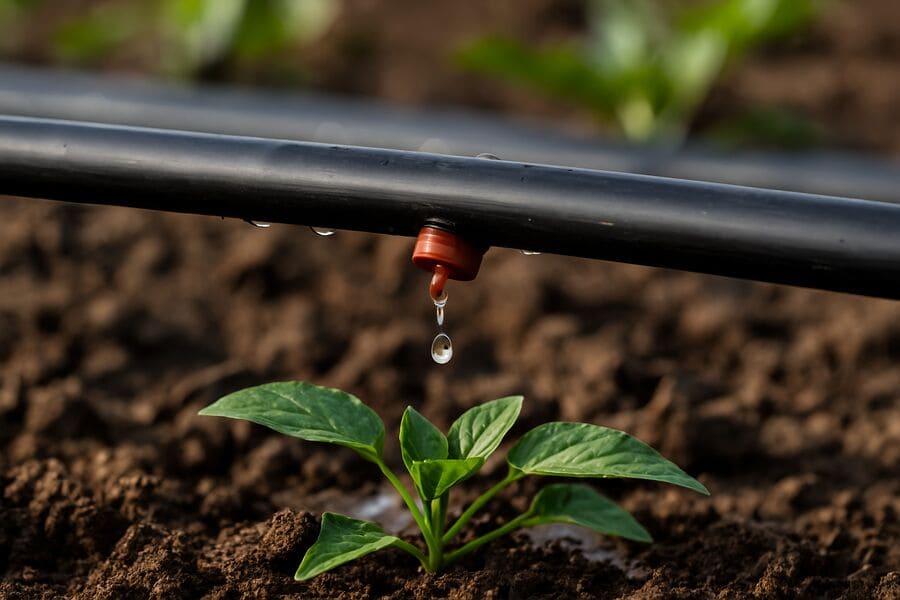
Drip irrigation uses significantly less water than flood irrigation by delivering it directly to plant roots. This blog explains how much water it saves and why it is a smarter choice for modern farming.
Did you know that traditional flood irrigation can waste nearly half the water applied to a field? This is one of the biggest hidden challenges in farming today.
Drip irrigation can save up to 50 to 70 percent more water compared to flood irrigation by delivering water directly to the root zone.
As water scarcity becomes a growing concern, farmers are shifting toward more efficient methods. In this blog, you will understand how drip irrigation saves water, why flood irrigation leads to losses, and how modern systems are helping farmers grow more with less.
Drip irrigation saves water by delivering it slowly and directly to the root zone instead of flooding the entire field.
In flood irrigation, large volumes of water are spread across the soil surface. Much of this water is lost through evaporation, runoff, or deep percolation beyond the root zone. As a result, only a portion of the applied water is actually used by the crop.
In contrast, drip irrigation ensures that water reaches only the plant roots where it is needed most. This targeted delivery reduces waste and improves efficiency. Experts suggest that drip irrigation can increase water-use efficiency to more than 90 percent, making it one of the most effective irrigation methods available today.
Flood irrigation wastes water because it is uncontrolled and spreads water unevenly across the field.
When water is applied in bulk, it flows across the land, often accumulating in low areas while leaving other sections under-irrigated. A significant portion evaporates under sunlight or seeps too deep into the soil where roots cannot access it.
Studies show that flood irrigation can lose up to 40 to 60 percent of water before it benefits the plant. This inefficiency not only wastes water but also increases energy and labour costs. Over time, it can also lead to soil degradation and nutrient loss.
Drip irrigation can save between 50 to 70 percent of water compared to flood irrigation.
This saving depends on factors like soil type, crop, and climate conditions. In dry and hot regions, the difference becomes even more significant because evaporation losses are higher in traditional methods.
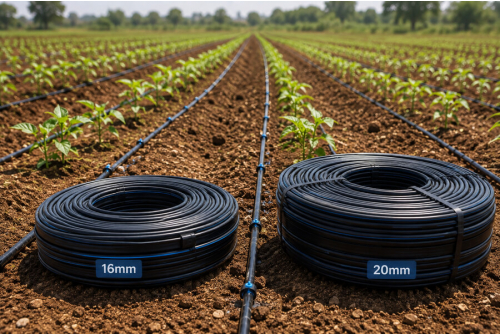
According to agricultural experts, farms that switch to drip irrigation often see immediate improvements in water usage and crop performance. Systems using components like Drip Tape & Fittings / 16 mm help maintain consistent flow across rows, ensuring that every plant receives the same amount of water without excess wastage.
Yes, drip irrigation not only saves water but also improves crop yield through consistent moisture supply.
When plants receive uniform water at the root level, they experience less stress and grow more evenly. This leads to better nutrient absorption and stronger root development.
Experts suggest that improved irrigation efficiency directly impacts yield quality and quantity. This is also explained in Climate-Proof Agriculture: Drip Irrigation as the Answer to Water and Yield Challenges, where efficient irrigation is linked to higher productivity and sustainability.
Drip irrigation is more efficient because it combines precision, control, and adaptability.
Unlike flood irrigation, which depends heavily on field conditions, drip systems can be customized for different crops and layouts. Farmers can control the flow rate, timing, and distribution of water, ensuring optimal usage.
With reliable systems like Flat Inline & Fittings / 16 mm, farmers can achieve uniform water distribution even across long rows. This level of control is one of the key reasons why modern farms are moving toward drip irrigation solutions from KSNM, where performance and durability are designed for long-term use.
Yes, drip irrigation is becoming the future of farming due to its ability to conserve water and improve efficiency.
As water resources become limited, farmers need systems that use every drop wisely. Drip irrigation aligns perfectly with this need by reducing waste and maximizing output.
Experts suggest that adopting efficient irrigation methods is essential for sustainable agriculture. With advanced solutions from KSNM, farmers are now able to manage water more effectively while maintaining consistent crop growth across seasons.
Conclusion
Drip irrigation is not just a better alternative to flood irrigation. It is a smarter way to farm.
By saving up to 70 percent of water, reducing losses, and improving crop performance, drip irrigation addresses some of the biggest challenges in modern agriculture. Flood irrigation may still be used in some cases, but its inefficiency makes it less suitable for long-term sustainability.
Switching to drip irrigation allows farmers to produce more with less water while maintaining soil health and reducing costs. As agriculture continues to evolve, choosing efficient systems will be key to future success.





 Drum Seeder and Cono...
September 02, 2026
Drum Seeder and Cono...
September 02, 2026
 Jasmine and Marigold...
August 27, 2026
Jasmine and Marigold...
August 27, 2026
 Understanding KSNM's...
August 20, 2026
Understanding KSNM's...
August 20, 2026
 Water Crisis 2026: W...
August 06, 2026
Water Crisis 2026: W...
August 06, 2026
 Cotton Drip Irrigati...
August 13, 2026
Cotton Drip Irrigati...
August 13, 2026
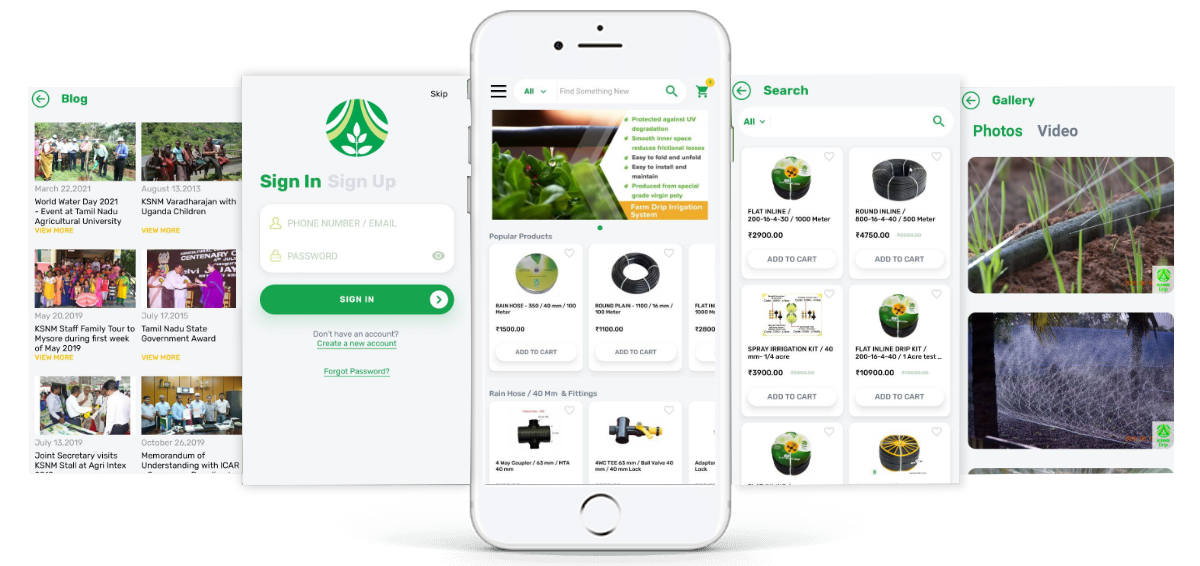
Introducing KSNM Drip’s Mobile App
Through our app’s convenience, start enjoying easy access, better experience and simple payment process. Download our App and begin your cart buying right away.


 Special offer!
 Track Order