Posted On: September 02, 2026
Posted By: KSNM DRIP
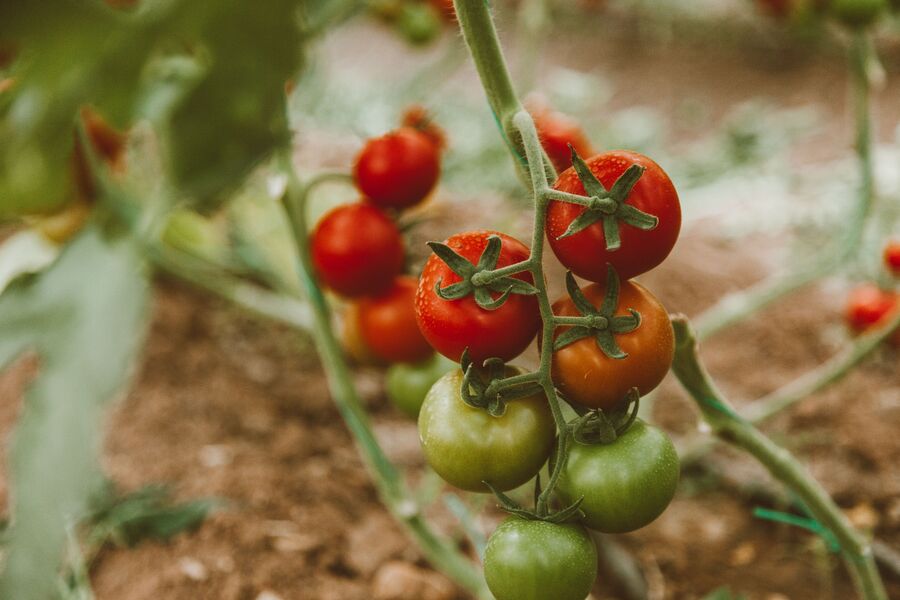
October tomato planting in South India demands a precise drip irrigation schedule that shifts with each crop stage, from transplanting through fruit set and harvest. This guide gives farmers a clear, stage-by-stage watering plan to protect yield and reduce water waste across the full season.
October is one of the best windows for tomato planting across Tamil Nadu and Andhra Pradesh, but it also brings one of the trickiest irrigation challenges. Soil temperatures are still warm from summer, post-monsoon moisture levels vary unpredictably across fields, and the crop moves through its most water-sensitive stages, flowering and fruit set, during the cooler December weeks when many farmers underestimate water demand.
Drip irrigation removes the guesswork from this equation. A stage-matched schedule delivers the right volume at each growth phase, protecting root development early and supporting fruit fill later without waterlogging or stress-induced flower drop.
The right drip irrigation schedule for October tomato planting changes at each crop stage rather than staying fixed throughout the season. Tomatoes have distinct water requirements from transplanting through vegetative growth, flowering, fruit set, and final ripening, and treating every stage the same way is one of the most common reasons yield falls short.
A practical stage-by-stage framework for October planting looks like this. During the first two weeks after transplanting, irrigate lightly once every day or on alternate days to establish root contact with soil without oversaturation. From weeks three to six, as vegetative growth accelerates, increase frequency to once daily and raise volume to match expanding root zone demand.
At flowering, which arrives in week seven to eight for October plantings, maintain consistent soil moisture at 60 to 70% field capacity without fluctuation. Fruit set and development from week nine through week fourteen needs the highest water input of the season, with daily irrigation and volume matched to crop load and evapotranspiration. Reduce irrigation in the final two weeks before harvest to improve fruit solids and skin quality.
Drip irrigation protects tomatoes at flowering by maintaining consistent soil moisture without the wet-dry swings that flood or furrow irrigation creates between cycles. Tomatoes drop flowers when the root zone experiences sudden moisture fluctuation, and this response happens faster than most farmers expect, sometimes within 24 to 48 hours of a missed irrigation cycle.
October plantings reach flowering in December, when temperatures are cooler and evapotranspiration rates drop. Many farmers cut back irrigation during this period assuming cooler weather reduces crop water needs. That assumption costs flowers. The crop still needs consistent moisture at the root zone even when surface soil appears damp from cooler conditions.
According to research published by the Indian Council of Agricultural Research, maintaining soil moisture consistency through the flowering stage in drip-irrigated tomato plots reduces flower drop by up to 35% compared to furrow-irrigated plots under similar temperature conditions. That difference shows up directly in fruit count per plant at harvest.
Water volume requirements for tomatoes shift significantly across the growth cycle. During establishment, a daily application of 2 to 3 litres per plant keeps the root zone moist without waterlogging. Vegetative growth pushes that figure to 4 to 5 litres per plant per day as leaf area expands and transpiration increases.
Flowering and fruit set represent peak demand. An October-planted tomato crop in Tamil Nadu typically needs 6 to 8 litres per plant per day during this window, depending on canopy size, temperature, and soil type.
Matching your drip system's emitter flow rate to these per-plant volumes determines how long each irrigation cycle needs to run. Getting this volume right prevents both undersupply stress and root zone oversaturation. For farms managing multiple crops alongside tomatoes, KSNM's irrigation planning guide for 5-acre and 10-acre farms shows how to zone different water volumes across the same property without pressure conflict.
Fertigation, delivering fertilizer through the drip system alongside water, fits naturally into a stage-matched irrigation schedule and improves nutrient uptake efficiency compared to soil broadcasting. October tomato planting benefits from a three-phase fertigation approach matched to the same growth windows as the irrigation schedule.
During establishment, nitrogen-forward formulations support fast root and shoot development. At vegetative growth, balanced NPK maintains steady expansion without excessive leaf growth at the expense of flower bud formation. From flowering through the fruit set, potassium-heavy feeding supports cell wall strength, fruit size, and sugar development in the final harvest weeks.
Delivering these nutrients through a Venturi injector connected directly to your drip mainline puts fertilizer at the root zone with each watering cycle. Broadcast application loses significant nutrient volume to leaching and volatilization in warm October soils. KSNM's Venturi injector range covers options suited to different flow rates and farm sizes for tomato fertigation setups.
The single most damaging scheduling mistake is cutting irrigation frequency during the cooler December flowering window. Cooler air temperatures reduce visible signs of water stress, so farmers assume the crop is fine. The root zone tells a different story. Consistent drip irrigation through December flowering is non-negotiable for October plantings.
The second mistake is skipping emitter checks before the crop hits peak demand. A clogged emitter in week nine, when the fruit set is active, can stress an entire row within days without showing obvious above-ground symptoms until the damage is done. If clogging has been a recurring issue on your farm, KSNM's guide on dripper clogging causes and prevention covers what to look for and how to fix it before the season peaks
A well-planned drip irrigation schedule for October tomato planting removes the two biggest yield risks: moisture inconsistency at flowering and volume mismatch at fruit set. Match water delivery to each crop stage, maintain consistency through the critical December flowering window, and pair your schedule with targeted fertigation for results that hold through harvest.
Start your October season with the schedule in place before transplanting, not after the first stress signs appear. Ready to build a drip system suited to your tomato layout? Explore KSNM's complete drip irrigation product range or contact KSNM Drip for guidance matched to your field and crop.





 How to Choose Betwee...
October 08, 2026
How to Choose Betwee...
October 08, 2026
 Two Decades of KSNM ...
September 02, 2026
Two Decades of KSNM ...
September 02, 2026
 Tomato Drip Irrigati...
September 02, 2026
Tomato Drip Irrigati...
September 02, 2026
 Filters in Drip Irri...
September 02, 2026
Filters in Drip Irri...
September 02, 2026
 Drum Seeder and Cono...
September 02, 2026
Drum Seeder and Cono...
September 02, 2026

Introducing KSNM Drip’s Mobile App
Through our app’s convenience, start enjoying easy access, better experience and simple payment process. Download our App and begin your cart buying right away.


 Special offer!
 Track Order