Posted On: October 08, 2026
Posted By: KSNM DRIP
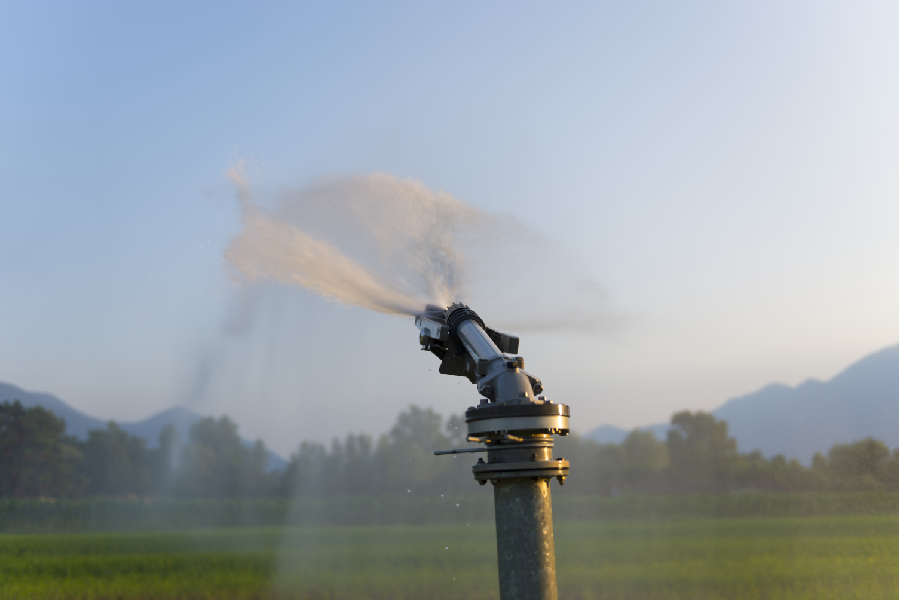
Choosing between a drip irrigation kit and a spray irrigation kit on a small farm depends on crop type, soil, and budget. This guide breaks down exactly how each system works, which crops suit each method, and how to make the right call before you invest.
Two farmers. Same acreage. Same crop budget. One chooses a drip irrigation kit, the other picks a spray irrigation kit. Six months later, their yields tell completely different stories. The difference wasn't effort or seed quality. It was the irrigation method matched to the wrong crop.
Drip irrigation and spray irrigation both deliver water efficiently compared to flood methods, but they work through entirely different mechanisms and suit different farming situations. Choosing between them without understanding those differences means paying for a system that underserves your specific crop and soil.
The choice between a drip kit and a spray irrigation kit comes down to one core question: does your crop need water at the root zone or at the surface? Drip irrigation delivers water directly to the root zone through emitters placed beside each plant. Spray irrigation, through rain hose or mini-sprinklers, distributes water across the full soil surface and lower canopy.
Root-zone crops with defined planting positions, vegetables like tomatoes, chillies, brinjal, and cucumbers, benefit from drip irrigation because the emitter sits beside each plant and delivers water precisely where the root draws it. Broadcast crops sown densely across a bed, like leafy greens, onions from seed, coriander, or pulses, suit spray irrigation because the plants are too closely spaced for individual emitter placement to be practical.
That fundamental difference drives every other decision: lateral placement, operating pressure, system cost, and maintenance requirements. Get this first question right, and the rest of the comparison falls into place cleanly.
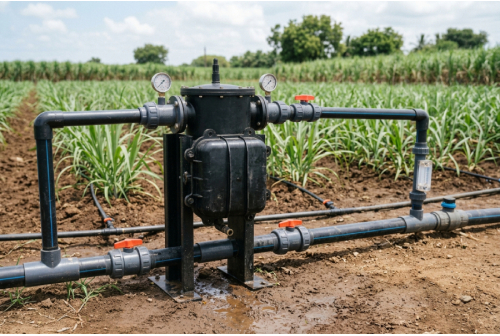
A drip irrigation kit for a small farm typically includes a mainline pipe, submain laterals, inline drip laterals with pre-installed emitters, a filter, fittings, and end caps. Everything connects from the water source through to the plant row. Setup takes a few hours on a one to two-acre plot and the system runs unattended once installed.
Drip kits work best for row crops with defined plant spacing and moderate to high water demand per plant. Tomatoes, brinjal, capsicum, cotton, and banana all suit drip irrigation because each plant has a specific root zone that the emitter targets directly. Drip also works exceptionally well under mulch, where surface evaporation would otherwise reduce spray irrigation's effectiveness.
Water efficiency is where drip irrigation holds a clear advantage. According to research from the Indian Council of Agricultural Research, drip irrigation reduces crop water consumption by 40 to 50% compared to conventional methods while maintaining or improving yield across major vegetable crops. On a small farm where every litre of water pumped costs electricity, that efficiency compounds across a full season. Explore KSNM's drip irrigation kits to see options suited to different farm sizes and row crop configurations.
A spray irrigation kit for small farms centers on a rain hose pipe, the flat perforated tube that inflates under pressure and releases water as a fine, shower-like spray across the bed. A basic kit includes a rain hose in the right diameter for your bed width, inlet fittings, end caps, and a filter. Setup is even simpler than drip, since there are no individual emitters to position beside plants.
Spray kits make more sense for densely sown crops where individual plant spacing makes drip emitter placement impractical. Leafy vegetables, onions sown from seed, coriander, fenugreek, and nursery seedling beds all suit rain hose irrigation because the spray covers the entire bed surface uniformly, reaching every seed or seedling without requiring individual lateral placement.
Germination uniformity is the biggest advantage spray irrigation delivers that drip cannot match. A rain hose covering the full bed surface keeps moisture even across every centimeter during the critical germination window, which directly improves seedling emergence rate and stand uniformity.
Research published in Scientific Reports in 2024, conducted across field stations in Pudukkottai and Tiruchirappalli, confirmed rain hose irrigation as one of the most effective methods for uniform moisture delivery in bed-sown crops. If your farm focuses on vegetable seedling production or densely sown crops, spray irrigation is the stronger choice at this stage. KSNM's rain hose range covers diameter options from 20mm to 63mm for different bed widths and farm scales.
Running costs favor drip irrigation on a per-litre-delivered basis because the system wastes almost nothing to evaporation or surface runoff. Spray irrigation loses more water to evaporation during hot afternoon operation, which is why timing irrigation to early morning matters more with spray systems than with drip.
Maintenance requirements differ in character rather than total effort. Drip systems need emitter checks and lateral flushing every two weeks during active irrigation, since clogged emitters reduce delivery to individual plants without obvious above-ground symptoms. Spray systems need filter cleaning and perforation checks to ensure uniform spray across the full pipe length, since blocked perforations create dry patches in an otherwise even bed.
Both systems reward consistent maintenance with extended component lifespan and stable field performance. Skipping filter cleaning on either system is the fastest way to create the kind of inconsistent water delivery that reduces yield without an obvious cause. KSNM's guide on dripper clogging causes and prevention applies equally to maintaining emitter performance in drip kits and perforation performance in spray systems.
Choosing between a drip irrigation kit and a spray irrigation kit for a small farm isn't a question of which system is better overall. It's a question of which crop you're growing and where that crop needs water delivered. Drip irrigation wins for row crops with defined root zones. Spray irrigation wins for densely sown beds where surface coverage determines germination and stand uniformity.
Match the system to the crop before you buy the kit, and your irrigation investment pays back across every season that follows. Ready to find the right fit for your farm? Explore KSNM's complete irrigation product range or contact KSNM Drip for guidance matched to your crop and field size.





 How to Choose Betwee...
October 08, 2026
How to Choose Betwee...
October 08, 2026
 Two Decades of KSNM ...
September 02, 2026
Two Decades of KSNM ...
September 02, 2026
 Tomato Drip Irrigati...
September 02, 2026
Tomato Drip Irrigati...
September 02, 2026
 Filters in Drip Irri...
September 02, 2026
Filters in Drip Irri...
September 02, 2026
 Drum Seeder and Cono...
September 02, 2026
Drum Seeder and Cono...
September 02, 2026

Introducing KSNM Drip’s Mobile App
Through our app’s convenience, start enjoying easy access, better experience and simple payment process. Download our App and begin your cart buying right away.


 Special offer!
 Track Order