Posted On: July 13, 2026
Posted By: KSNM DRIP
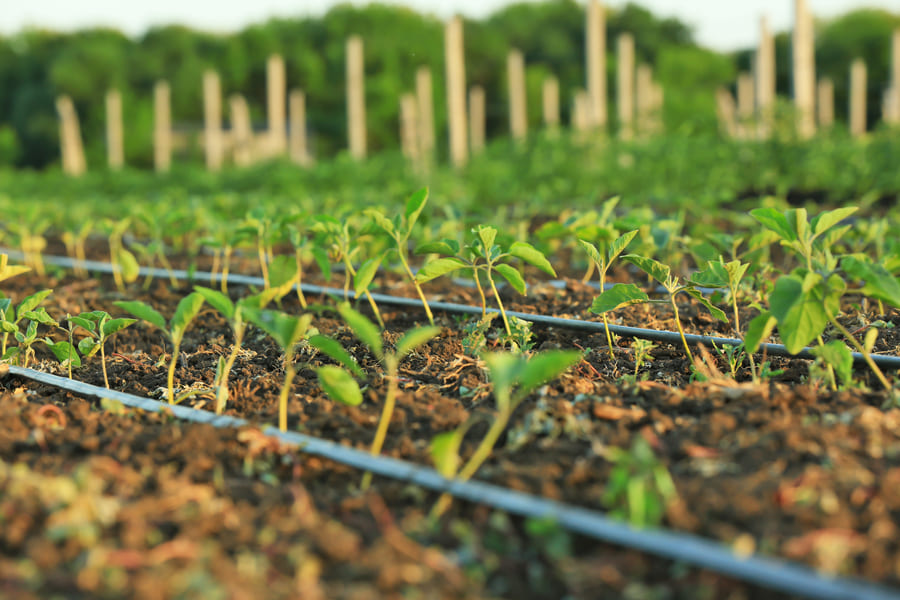
Drip irrigation planning shifts significantly once a farm grows from 5 acres to 10. It demands different zoning, and pump capacity at each scale. This guide walks through drip irrigation planning for 5-acre and 10-acre farms, covering layout design, pipe sizing, pump capacity, and budget so every acre gets water efficiently.
What happens when a drip irrigation system designed for one acre gets stretched across ten? It fails. Pressure drops at the far end of the field, some rows get flooded while others stay dry, and you end up blaming the crop when the real problem was the plan. Drip irrigation works brilliantly at scale, but only when the layout, pipe sizing, and pump capacity match the actual land you're working with.
Farm size changes everything about how you design a system. A 5-acre farm and a 10-acre farm don't just need more pipe. They need different zoning, different pressure management, and different filtration setups entirely.
In this guide, you'll learn exactly how to plan drip irrigation for both farm sizes and how KSNM Drip offers irrigation support to farms of any size.
Planning drip irrigation for these farm sizes starts with three main things. Mapping your water source, calculating pressure across the distance, and dividing the land into zones. Skip any one of these, and the system underperforms no matter how good the pipes are.
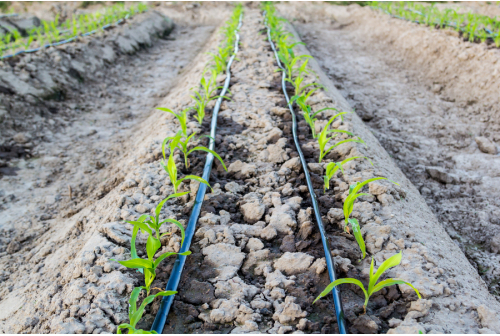
Start by sketching your land on paper, marking the water source, slope direction, and crop rows. From there, work backward. Figure out how far water needs to travel from the pump to the farthest row, because pressure drops the longer it travels. On a 1-acre plot, that drop is negligible. Across 5 or 10 acres, it can leave your far rows starved while the near rows flood. Also, both 5-acre and 10-acre farms require quality drip irrigation tools to maintain the flow of water in all areas.
KSNM Drip has a wide range of products that help farmers in selecting the best drip irrigation solution for their farms.
Pump capacity depends on flow rate, not just farm size. For a 5-acre farm growing standard row crops, a 3 to 5 HP pump usually delivers enough flow when paired with proper zoning. A 10-acre farm typically needs 5 to 7.5 HP, especially if the land has any slope or the water source sits far from the field.
Undersizing the pump is a common mistake. Farmers assume bigger pipes alone solve pressure problems, but if the pump can't push enough water through the system in the first place, no amount of pipe diameter fixes that. Always size the pump to your total zone flow rate, not your total acreage.
The number of zones depends on your pump's flow rate and how much area it can water at once without losing pressure. A useful rule is that each zone should match what your pump can comfortably serve in one cycle.
For a 5-acre farm, 2 to 3 zones generally keeps pressure even. For 10 acres, plan for 4 to 6 zones, watered in sequence rather than together. This also helps manage peak electricity load, since running fewer zones at a time draws less power per cycle.
Filtration protects your investment regardless of farm size. A disc or screen filter installed right after the pump removes sediment before it reaches your emitters. Without it, clogging shows up within the first season, especially with borewell or canal water sources.
For both 5-acre and 10-acre setups, match your filter capacity to your total flow rate, not just your pipe size. A filter sized too small for the flow becomes a bottleneck of its own. KSNM's filter range covers options for different water sources and farm scales.
Costs don't scale in a straight line because larger farms benefit from economies of scale on materials, but they also need stronger pumps and more fittings. Beyond installation costs, drip irrigation is beneficial because it delivers long-term value by improving water efficiency, reducing wastage, and helping crops receive consistent moisture for healthier growth. A 5-acre setup typically costs less per acre than scattered, piecemeal installations because you're buying in bulk from the start.
Whichever size you're planning for, always budget slightly above your calculated need. Crop changes, land expansion, or pressure adjustments down the line are far cheaper to handle with some buffer built in from day one.
Planning drip irrigation for 5-acre and 10-acre farms isn't about scaling one design up or down. It demands fresh calculations for pipe size, pump capacity, and zoning at every stage. Get the zoning right, match your pump to your actual land size, and budget with some room to grow, and your system will deliver consistent water to every row, not just the rows closest to the source.
Ready to plan your own layout? Contact KSNM Drip to get a detailed guide on what suits your farm based on its size and crop.





 Drum Seeder and Cono...
September 02, 2026
Drum Seeder and Cono...
September 02, 2026
 Jasmine and Marigold...
August 27, 2026
Jasmine and Marigold...
August 27, 2026
 Understanding KSNM's...
August 20, 2026
Understanding KSNM's...
August 20, 2026
 Water Crisis 2026: W...
August 06, 2026
Water Crisis 2026: W...
August 06, 2026
 Cotton Drip Irrigati...
August 13, 2026
Cotton Drip Irrigati...
August 13, 2026

Introducing KSNM Drip’s Mobile App
Through our app’s convenience, start enjoying easy access, better experience and simple payment process. Download our App and begin your cart buying right away.


 Special offer!
 Track Order