Posted On: July 01, 2026
Posted By: KSNM DRIP
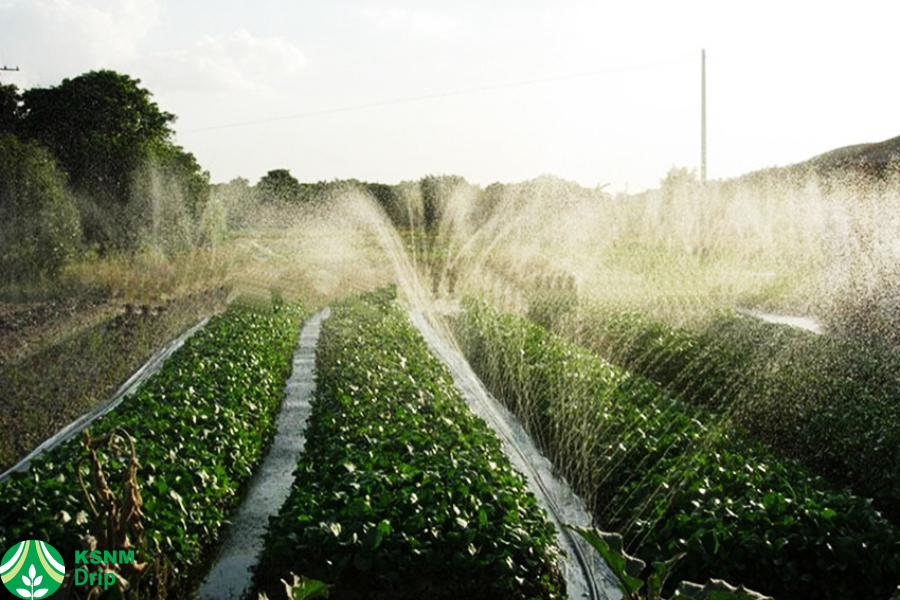
Water distribution uniformity determines how evenly a rain hose irrigation system covers a field. This guide breaks down the technical factors behind uniform coverage and how to measure and improve it on your own farm.
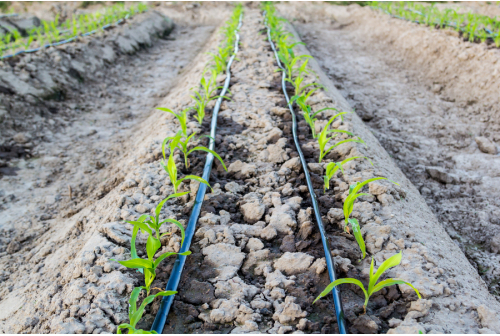
What separates a rain hose system that delivers even growth across an entire field from one that leaves patchy, uneven crops? The answer is water distribution uniformity. Rain hose irrigation works by releasing water through evenly spaced perforations along the pipe, but small variations in pressure, perforation spacing, or pipe length can quietly throw that uniformity off.
Uniformity isn't a vague quality metric. It's a number you can calculate, and it directly predicts how consistent your germination, growth, and yield will be across a bed. KSNM Drip has spent over two decades engineering rain hose systems built specifically to hold that uniformity steady. In this guide, you'll learn exactly what affects distribution uniformity in rain hose systems, how to measure it, and what changes actually improve it in the field.
Water distribution uniformity measures how evenly water gets applied across a field through a rain hose system. It's typically expressed as a percentage, where values above 80% indicate strong, consistent coverage, and anything below 70% suggests parts of your field are receiving noticeably less water than others.
Engineers calculate this using the Christiansen Uniformity Coefficient, which compares actual water depth collected at multiple points along the bed against the average depth across all points. The closer those readings match each other, the higher your uniformity score.
Consider a 50-metre rain hose run on a vegetable bed. If catch cans placed every 5 metres along that run collect similar volumes, the system is performing well. If the cans near the water source collect noticeably more than the cans at the far end, pressure loss is reducing your effective uniformity, even though the pipe looks identical throughout its length.
Perforation consistency, pressure variation, and pipe diameter are the three factors driving uniformity in rain hose systems. Get any one of these wrong, and uniformity drops even if the rest of the setup looks correct on paper.
Perforation consistency depends entirely on manufacturing precision. KSNM Drip's rain hose pipes use nano-punching technology to keep every perforation identically spaced and sized along the full pipe length. Inconsistent perforation sizing, common in lower-quality pipes, causes some sections to discharge more water than others regardless of pressure.
Pressure variation happens naturally as water travels through any pipe. The further water moves from the source, the more pressure it loses to friction against the pipe wall. For instance, a 40mm rain hose runs beyond 60 to 70 metres. It often shows measurable pressure drop at the far end unless the system is properly zoned or fed from both ends.
Pipe diameter relative to flow rate determines whether your pump can maintain adequate pressure throughout the run. A pipe too narrow for your pump's output creates excessive friction loss, while one too wide reduces velocity and weakens spray consistency near the perforations.
Measuring uniformity doesn't require expensive equipment. Place catch cans at regular intervals along your rain hose run, typically every 5 to 10 metres, and let the system run for a fixed duration. Compare the water collected in each can. Significant differences point directly to where your system needs adjustment.
Research published by the Central Institute of Agricultural Engineering shows that distribution uniformity above 80% in micro-irrigation systems correlates strongly with consistent germination rates and reduced bare patches across treated beds. That correlation makes uniformity testing worth the modest time investment, especially before a critical sowing window.
Filtration plays a supporting role too, since clogged perforations from sediment buildup reduce uniformity just as much as pressure loss does. KSNM's filter range helps maintain consistent flow by catching sediment before it reaches the perforations.
Water distribution uniformity isn't a minor technical detail. It's the single factor that determines whether your rain hose system delivers consistent results across an entire field or leaves you guessing why some rows underperform. Measuring it with simple catch cans, addressing pressure loss through proper zoning, and choosing pipes with consistent manufacturing all push that uniformity score higher.
Ready to test your own system's uniformity this season? Contact KSNM Drip to start improving your water distribution uniformity."





 Drum Seeder and Cono...
September 02, 2026
Drum Seeder and Cono...
September 02, 2026
 Jasmine and Marigold...
August 27, 2026
Jasmine and Marigold...
August 27, 2026
 Understanding KSNM's...
August 20, 2026
Understanding KSNM's...
August 20, 2026
 Water Crisis 2026: W...
August 06, 2026
Water Crisis 2026: W...
August 06, 2026
 Cotton Drip Irrigati...
August 13, 2026
Cotton Drip Irrigati...
August 13, 2026

Introducing KSNM Drip’s Mobile App
Through our app’s convenience, start enjoying easy access, better experience and simple payment process. Download our App and begin your cart buying right away.


 Special offer!
 Track Order