Posted On: January 05, 2026
Posted By: KSNM DRIP
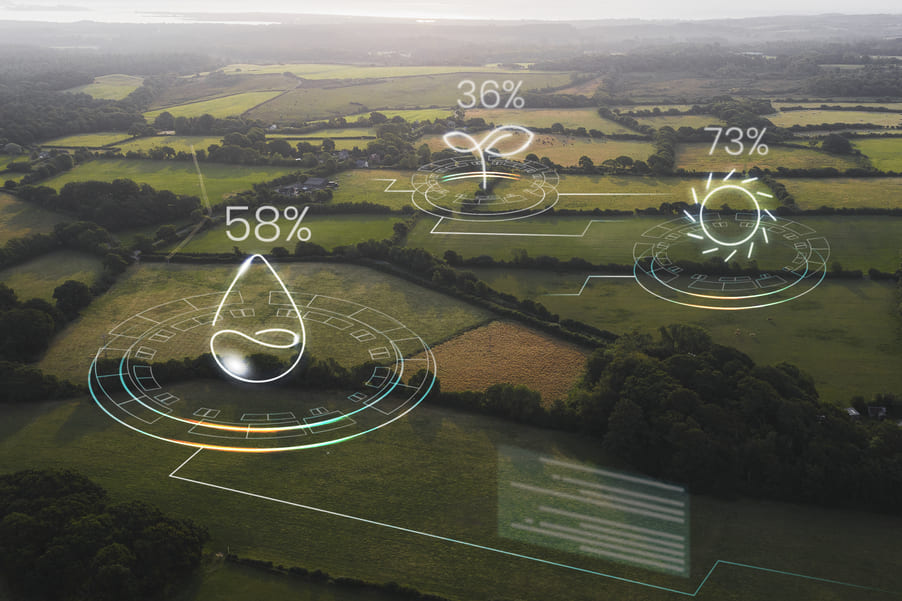
As climate risks grow, farmers need smarter irrigation solutions. This blog explores how drip irrigation helps conserve water, protect crop health, and build resilient, climate-ready agricultural systems.
Climate change has quietly become one of the biggest forces reshaping agriculture. Unpredictable rainfall, longer dry spells, rising temperatures, and shrinking water resources are making farming more uncertain with every season. In this changing landscape, drip irrigation has emerged as one of the most practical tools for building climate-proof agriculture. By delivering water precisely to the root zone, it helps farmers protect both yield and resources when traditional irrigation methods struggle. This blog explores why climate-proof agriculture matters today, how drip irrigation addresses water and yield challenges, and why it is becoming an essential strategy for resilient farming.
Climate-proof agriculture refers to farming practices that can withstand weather extremes while maintaining stable productivity. Across many regions, farmers now face irregular monsoons, sudden heat waves, and declining groundwater levels. These challenges make it harder to rely on flood or surface irrigation, which often wastes water and leaves crops stressed during dry periods.
This is where drip irrigation directly addresses the core problem. Instead of depending on rainfall patterns or heavy watering cycles, farmers gain control over when, where, and how much water crops receive. Climate-proofing agriculture is ultimately about reducing dependency on uncertain weather, and precise irrigation plays a central role in that transition.
Water scarcity is the most visible impact of climate change on agriculture. Traditional irrigation methods lose large volumes of water through evaporation, runoff, and deep percolation. In contrast, drip irrigation applies water slowly and directly to the root zone, keeping moisture exactly where plants need it.
This targeted approach significantly improves water-use efficiency. Studies and field experience consistently show that drip systems can reduce water consumption by 30–60 percent compared to flood irrigation. By using less water per acre, farmers are better equipped to manage drought years, falling water tables, and restricted irrigation schedules without sacrificing crop health.
One of the biggest risks climate change poses is yield instability. Crops exposed to irregular watering often suffer from stress, uneven growth, and poor fruit development. Drip irrigation helps stabilise yields by maintaining consistent soil moisture throughout the growing cycle, even when external conditions fluctuate.
When crops receive steady water at critical growth stages, they develop stronger root systems and better resilience to heat stress. Over time, farmers using drip irrigation often notice more uniform crop size, improved quality, and predictable harvests. This stability is crucial for climate-proof agriculture, where consistency matters as much as productivity.
Rising temperatures are another growing challenge for farmers. High heat increases evaporation from the soil surface and places additional stress on crops. Flood irrigation under such conditions often leads to rapid moisture loss and cracked soils, which further harm root systems.
Drip irrigation mitigates this problem by keeping moisture below the surface, reducing evaporation even during hot periods. Because water is delivered directly to the roots, plants can maintain hydration without surface saturation. This makes drip irrigation especially valuable for vegetables, fruit crops, and plantations that are highly sensitive to temperature extremes.
Climate-proof agriculture is not only about water; it also involves efficient nutrient management. Excess rainfall or over-irrigation can wash fertilisers away, while drought conditions can limit nutrient uptake. Drip irrigation supports fertigation, where nutrients are applied along with irrigation water in controlled quantities.
With fertigation, farmers can feed crops gradually and in sync with growth stages. This improves nutrient absorption and reduces fertiliser loss, even under unpredictable climate conditions. When combined with drip irrigation, fertigation becomes a powerful tool for maintaining yield quality while lowering input costs and environmental impact.
One of the reasons drip irrigation is central to climate-proof agriculture is its adaptability. It works effectively across vegetables, orchards, plantations, and field crops, and it performs well in both arid and semi-arid regions. Farmers can adjust emitter spacing, flow rates, and irrigation schedules based on crop type and soil condition.
This flexibility allows drip irrigation systems to respond to changing climate patterns rather than being limited by them. Whether rainfall arrives late, temperatures rise unexpectedly, or water availability fluctuates, drip systems can be fine-tuned to maintain crop performance.
Climate change increases not only environmental risk but also financial uncertainty. Crop losses, rising water costs, and higher labour requirements can quickly affect farm profitability. Drip irrigation contributes to economic resilience by lowering long-term operational costs through water savings and reduced labour dependency.
Although the initial investment may seem significant, many farmers recover costs within a few seasons due to improved yield consistency and reduced input usage. Over time, drip irrigation becomes a cost-effective strategy that aligns financial stability with climate resilience.
Climate-proof agriculture is about preparing farms for uncertainty while protecting productivity. As weather patterns continue to shift, relying on traditional irrigation methods becomes increasingly risky. Drip irrigation offers a practical, proven solution by conserving water, stabilising yields, and reducing crop stress under challenging conditions.
By adopting drip irrigation, farmers gain control over one of the most critical inputs in agriculture, water. This control translates into resilience, sustainability, and long-term growth. For those looking to future-proof their farms against climate challenges, drip irrigation is not just an option; it is an essential step toward smarter, climate-ready agriculture.





 Drum Seeder and Cono...
September 02, 2026
Drum Seeder and Cono...
September 02, 2026
 Jasmine and Marigold...
August 27, 2026
Jasmine and Marigold...
August 27, 2026
 Understanding KSNM's...
August 20, 2026
Understanding KSNM's...
August 20, 2026
 Water Crisis 2026: W...
August 06, 2026
Water Crisis 2026: W...
August 06, 2026
 Cotton Drip Irrigati...
August 13, 2026
Cotton Drip Irrigati...
August 13, 2026
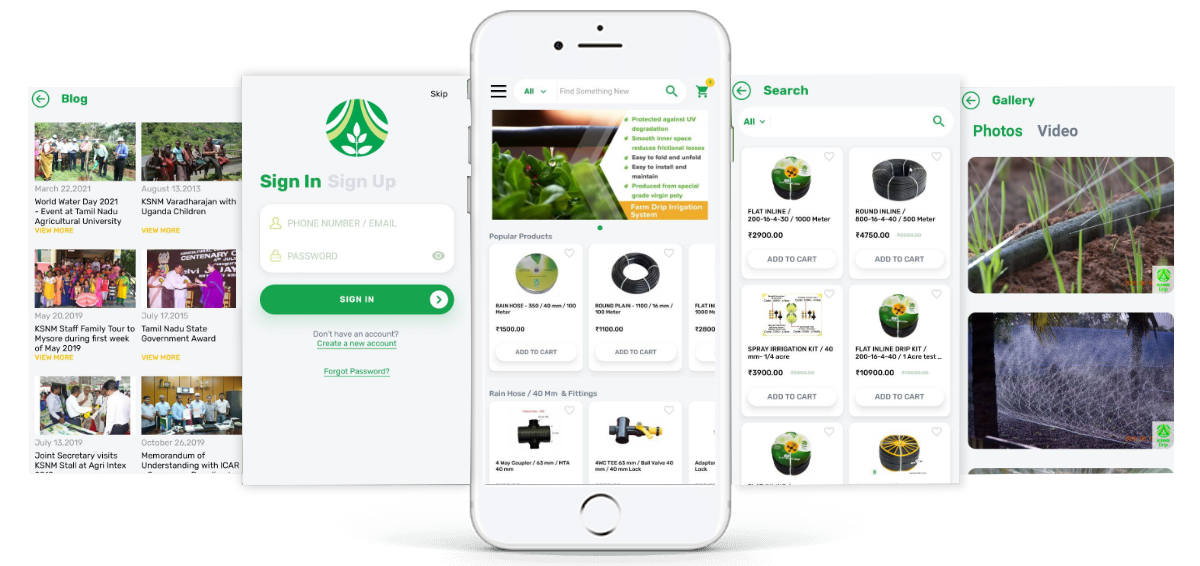
Introducing KSNM Drip’s Mobile App
Through our app’s convenience, start enjoying easy access, better experience and simple payment process. Download our App and begin your cart buying right away.


 Special offer!
 Track Order