Posted On: May 21, 2026
Posted By: KSNM DRIP
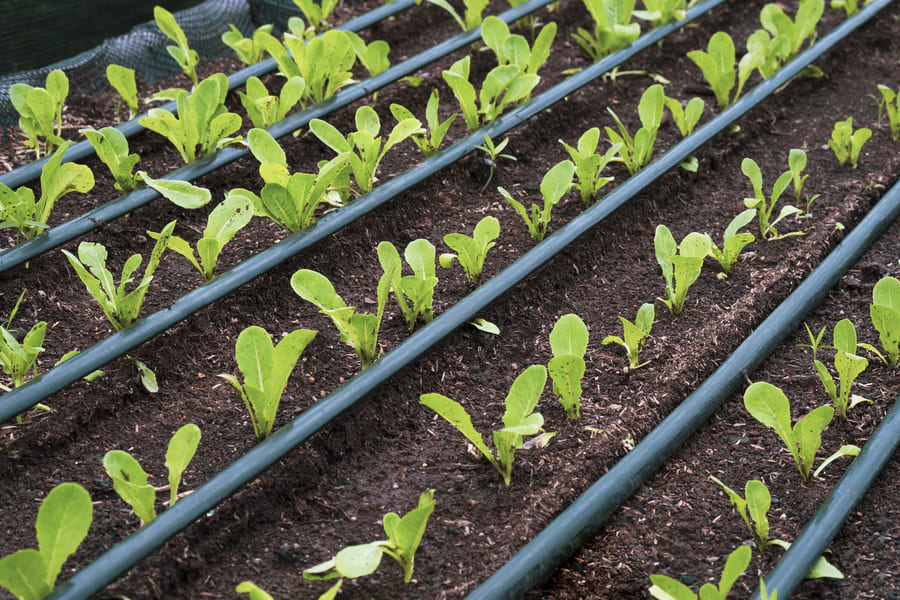
This guide covers the top 10 advantages of sprinkler irrigation in agriculture, helping farmers understand how drip irrigation and sprinkler systems together can save water, cut costs and grow better crops in 2026.
Agriculture feeds the world. But the way we water our crops is quietly draining it. Over 70% of India's freshwater goes into farming, and a large share of it is lost before it ever reaches a root. Drip irrigation and sprinkler irrigation are the two smartest answers to that problem. While drip irrigation delivers water directly to the root zone, sprinkler irrigation covers the entire crop canopy in a controlled, rainfall-like manner, cutting waste and boosting results at the same time. Research published in Agronomy Journal confirms that sprinkler systems achieve up to 39% water savings compared to conventional surface irrigation methods. In this blog, you will learn the top 10 advantages of sprinkler irrigation and how it complements drip irrigation to transform farming across India.
Sprinkler irrigation is a pressurised water delivery system that mimics natural rainfall by spraying water through a network of pipes, pumps, and rotating nozzles directly over crops. Drip irrigation, on the other hand, delivers water precisely at the root level through emitters placed along lateral pipes. Both systems fall under the broader umbrella of micro irrigation, and both share the same core mission, which is to use every drop of water as efficiently as possible. According to ScienceDirect, sprinkler irrigation is particularly suitable for water-scarce areas and uneven terrains where other irrigation methods are simply not practical. Together, drip irrigation and sprinkler systems give farmers a complete toolkit for smarter and more sustainable agriculture.
Traditional flood irrigation wastes water on a massive scale. Water travels across the soil surface, evaporating, running off, and seeping far below the root zone before crops can absorb it. Both drip irrigation and sprinkler irrigation eliminate most of that waste by applying water in precise and measured quantities only where it is needed. Current data shows that more than 60% of agricultural regions face moderate to severe water stress, making irrigation efficiency not just beneficial but absolutely critical for food security. A well-designed sprinkler system ensures every litre of water earns its place in the field. That is a game changer for any farmer already using or considering drip irrigation.
Uneven watering is one of the most costly problems in conventional irrigation. Sprinkler systems solve this completely. Rotating heads spread water evenly across the entire field regardless of shape or size, ensuring every plant receives a consistent supply. Just like drip irrigation guarantees uniform moisture at the root zone, sprinkler irrigation guarantees uniform coverage across the entire canopy. The result is uniform crop growth and a harvest you can actually plan around.
Running traditional irrigation channels requires hours of daily manual effort. A sprinkler system changes that reality completely. Once installed, it can be operated by one person or automated entirely with timers and sensors. Agricultural economists note that labour savings alone can recover a large portion of installation costs within two to three growing seasons, mirroring the cost efficiency that drip irrigation already delivers at the root level.
Flood irrigation demands flat and well-levelled land. Sprinkler systems carry no such restriction. Research confirms that sprinkler irrigation works effectively on slopes and undulating terrain where surface irrigation simply cannot function. Paired with drip irrigation for row crops and orchards, you get complete coverage across every inch of your farm regardless of how the land lies.
Consistent and controlled water supply produces measurably better crops. Studies on cotton crops specifically show higher yields and better water use efficiency under sprinkler irrigation compared to surface methods. Farmers using drip irrigation already experience this benefit at the root level. Sprinkler irrigation extends that same quality advantage to the entire plant and canopy, often resulting in produce that commands better prices at the market.
Here is an advantage most farmers never expect from an irrigation system. During cold nights, a fine spray of water over the crop canopy releases latent heat as it settles, creating a protective thermal layer around plant tissue. In extreme heat, the evaporative cooling effect of sprinkler application can reduce the temperature around crops by several degrees. This makes a sprinkler system a form of crop insurance that also waters your field, a benefit that drip irrigation alone cannot provide.
Sprinkler systems serve as a precise delivery mechanism for liquid fertilisers and pesticides through a method called fertigation. Research shows that sprinkler-based fertigation delivers fertilisers with higher efficiency than manual broadcasting, often reducing input requirements by 20 to 30 percent while achieving equal or better results. Farmers using drip irrigation are already familiar with the power of fertigation at the root level. Sprinkler fertigation extends that same precision to the full crop canopy.
Flood irrigation keeps the entire soil surface wet, creating ideal conditions for weeds to germinate and spread. Sprinkler irrigation targets the crop canopy and root zone, leaving inter-row spaces relatively dry. Fewer weeds means less competition for nutrients and less herbicide use every season. Paired with drip irrigation which also keeps surface soil drier than flood methods, this creates a powerful dual defence against weeds and disease across your entire farm.
Sandy soils drain fast. In flood irrigation, water disappears below the root zone before crops can absorb it. Sprinkler systems solve this with short and frequent application cycles that match the soil's natural infiltration rate. Drip irrigation solves the same problem at the root level. Together, both systems give farmers on sandy terrain a complete and highly effective water management solution. Read more about choosing the right system for your soil on KSNM's farming resource blog.
Flood irrigation strips away the nutrient-rich upper layers of farmland over time, slowly reducing productivity season after season. Sprinkler irrigation applies water gently and gradually, mimicking natural rainfall with minimal surface disruption. Farmers who combine sprinkler irrigation with drip irrigation for precision root-level moisture often notice measurable improvements in soil structure within just a few growing seasons. Learn more at KSNM's drip irrigation guide.
By 2026, over 60% of new farms globally are projected to adopt automatic sprinkler irrigation systems. These systems scale to fit every farm and every budget. A compact portable sprinkler kit works beautifully on a half-acre plot. A fully automated network handles hundreds of acres with equal efficiency. KSNM's range of spray irrigation kits has been designed specifically to make this technology accessible to small and marginal farmers across India. Explore the full range at ksnmdrip.com.
Both systems serve different but complementary purposes. Drip irrigation delivers water with pinpoint accuracy directly to the root zone, making it ideal for orchards, row crops, and water-sensitive plants. Sprinkler irrigation covers the full canopy and works best for closely spaced crops like wheat, groundnut, vegetables, and pulses. Many progressive farmers today run both systems side by side. The best irrigation strategy is always the one built around your specific crop, soil, and water availability.





 How to Choose Betwee...
October 08, 2026
How to Choose Betwee...
October 08, 2026
 Two Decades of KSNM ...
September 02, 2026
Two Decades of KSNM ...
September 02, 2026
 Tomato Drip Irrigati...
September 02, 2026
Tomato Drip Irrigati...
September 02, 2026
 Filters in Drip Irri...
September 02, 2026
Filters in Drip Irri...
September 02, 2026
 Drum Seeder and Cono...
September 02, 2026
Drum Seeder and Cono...
September 02, 2026
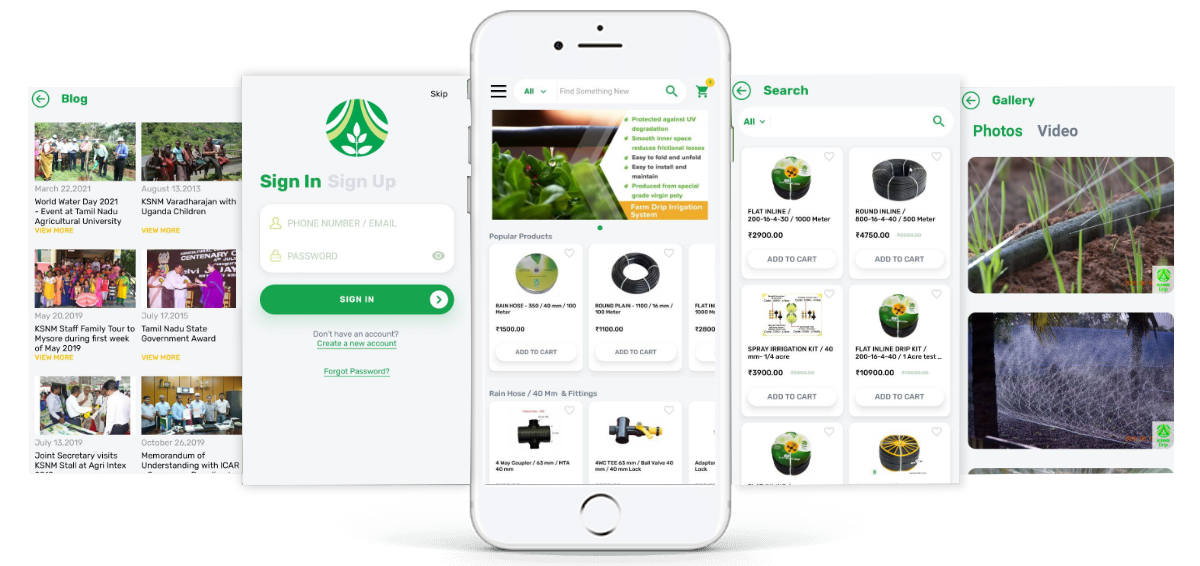
Introducing KSNM Drip’s Mobile App
Through our app’s convenience, start enjoying easy access, better experience and simple payment process. Download our App and begin your cart buying right away.


 Special offer!
 Track Order