Posted On: May 08, 2026
Posted By: KSNM DRIP
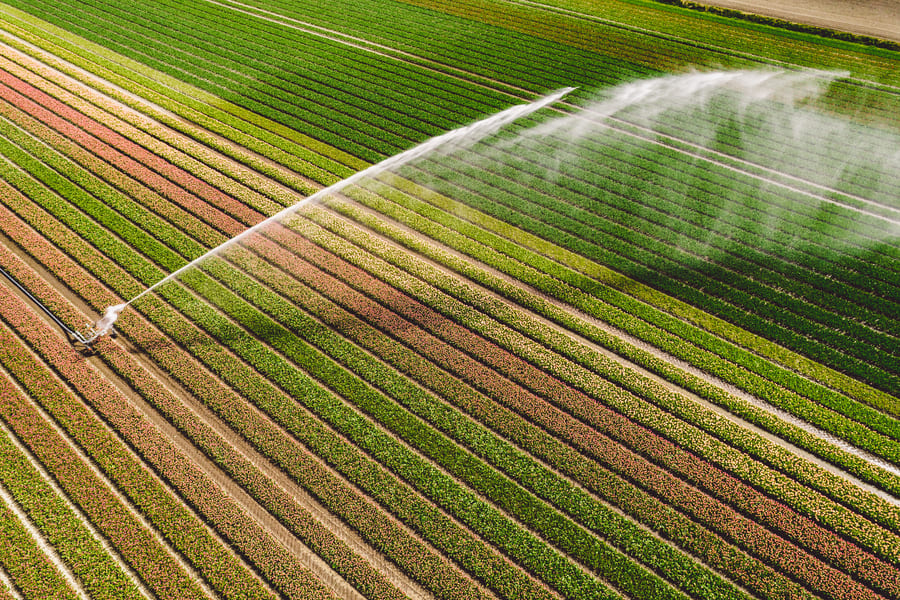
This blog explains how sprinkler irrigation and drip irrigation work together to reduce water waste in agriculture, covering the science, real-world benefits, and practical steps Indian farmers can take to irrigate smarter and grow better in 2026.
What if 40% of the water your farm uses never reaches your crops at all? According to Cool Farm Alliance, 70% of the world's freshwater is consumed by agriculture, and 40% of that is wasted every year because of inadequate irrigation systems, evaporation, and poor water management. That is not just a resource problem. It is a financial one that hits every farmer directly at the end of every season. Sprinkler irrigation and drip irrigation are the two most effective tools available today to close that gap. In this blog, you will learn exactly how these systems reduce water waste, why they outperform traditional methods, and how Indian farmers can start using them to protect both their crops and their water supply.
Water waste in agriculture is not just about leaving a tap running. It is a structural problem built into how most farms still irrigate their fields. Traditional flood irrigation sends water rushing across the surface of the field, where a large share of it evaporates under the sun, runs off into drainage channels, or seeps deep below the root zone where no crop can ever reach it. Precision irrigation methods like drip irrigation can reduce water use by 40 to 60% compared to flood irrigation, depending on crop, soil, and climate conditions. That kind of saving does not just benefit the environment. It directly reduces the cost of every liter a farmer pumps onto their land. For small and marginal farmers across India, where water availability is already shrinking season by season, that difference is the line between a profitable harvest and a failed one.
Sprinkler irrigation reduces water waste by delivering water in a controlled, rainfall-like manner directly over the crop canopy, eliminating the surface runoff and uncontrolled spreading that makes flood irrigation so inefficient. Modern sprinkler irrigation systems achieve field efficiencies of 75 to 85 percent, significantly reducing water waste compared to conventional surface methods. In practical terms, this means that for every 100 litres pumped into a sprinkler system, between 75 and 85 litres actually reach and benefit the crop. Compare that to flood irrigation, where that number can drop to 40 or 50 litres, and the advantage becomes impossible to ignore.
The key to sprinkler irrigation's efficiency lies in its ability to apply water in short and frequent cycles that match the soil's natural absorption rate. Instead of overwhelming the field with a single heavy flow that runs off or percolates beyond the roots, sprinkler systems keep the root zone consistently and precisely moist. This is especially powerful in sandy or light soils where water drains fast. You can see exactly how KSNM's sprinkler systems are designed to maximise this efficiency across different soil types on KSNM's spray irrigation kit page.
Drip irrigation takes water efficiency one step further by bypassing the canopy altogether and delivering water directly to the root zone through a network of emitters and lateral pipes. According to research published in the Journal of Sustainable Development and Environmental Research, drip irrigation can reduce water usage by up to 50% compared to surface irrigation, making it particularly beneficial in regions facing water shortages. Because water is applied slowly and directly at the base of each plant, there is almost no opportunity for evaporation, runoff, or deep percolation to waste what has been pumped.
Drip irrigation is especially powerful for high-value crops like fruits, vegetables, and orchards where precise moisture control also directly improves produce quality and market value. Farmers who have switched from flood methods to drip irrigation consistently report not just water savings but better yields, healthier soil, and lower fertiliser costs because nutrients can be delivered through the same system with pinpoint accuracy. Read more about how drip irrigation transforms fertiliser efficiency on KSNM's fertigation resource blog.
Absolutely, and many of India's most progressive farmers are already doing exactly that. Sprinkler irrigation and drip irrigation are not competing systems. They are complementary tools that serve different crops and different field conditions on the same farm. Sprinkler systems work best for closely spaced crops like wheat, groundnut, pulses, and vegetables where canopy coverage is an advantage. Drip irrigation performs best for row crops, orchards, and water-sensitive plants where root-zone precision matters most.
Running both systems side by side gives a farm complete water management coverage. The sprinkler handles open field grains and cover crops while the drip lines serve orchards and high-value vegetables. Together, they ensure that not a single litre of water is wasted anywhere on the farm at any point in the growing season. According to the USDA Economic Research Service, pressurised irrigation systems including sprinkler and drip systems are generally more water-use efficient than gravity systems, as less water is lost to evaporation, deep percolation and field runoff. Learn how to choose the right combination for your farm and soil type on KSNM's irrigation system guide.
Reducing water waste through drip irrigation and sprinkler systems delivers benefits that go well beyond simply saving water. When less water is applied to the surface, weeds have fewer conditions to germinate and spread, cutting the time and cost spent on manual weeding every season. When soil is not repeatedly flooded and disturbed, its structure stays intact, organic matter is preserved, and long-term fertility improves season after season.
Farmers also report significant reductions in energy costs because pumping less water means running motors for fewer hours every day. Reduced waterlogging also means fewer fungal diseases and healthier root systems across the board. And when water and nutrients are delivered precisely where they are needed, crops grow more uniformly, reducing the patchy yields that cost farmers money at the market. Protecting your crops through the summer months using smart irrigation is covered in detail on KSNM's seasonal farming guide.
Reducing water waste in agriculture is one of the most urgent and actionable challenges facing Indian farmers today. Sprinkler irrigation and drip irrigation are not future technologies waiting to be adopted. They are proven, practical, and affordable systems that are already transforming farms across the country. Whether you are losing water to evaporation, runoff, or deep percolation, the right irrigation system closes those gaps and turns every litre pumped into a litre that works for your crop. The combination of sprinkler irrigation for field crops and drip irrigation for high-value produce gives any farm a complete, efficient, and cost-effective water management strategy. KSNM has spent over two decades building irrigation solutions specifically for small and marginal farmers across India. Take the first step toward smarter water use by exploring KSNM's complete range of drip irrigation and sprinkler systems at ksnmdrip.com today.





 How to Choose Betwee...
October 08, 2026
How to Choose Betwee...
October 08, 2026
 Two Decades of KSNM ...
September 02, 2026
Two Decades of KSNM ...
September 02, 2026
 Tomato Drip Irrigati...
September 02, 2026
Tomato Drip Irrigati...
September 02, 2026
 Filters in Drip Irri...
September 02, 2026
Filters in Drip Irri...
September 02, 2026
 Drum Seeder and Cono...
September 02, 2026
Drum Seeder and Cono...
September 02, 2026

Introducing KSNM Drip’s Mobile App
Through our app’s convenience, start enjoying easy access, better experience and simple payment process. Download our App and begin your cart buying right away.


 Special offer!
 Track Order