Posted On: March 02, 2026
Posted By: KSNM Admin
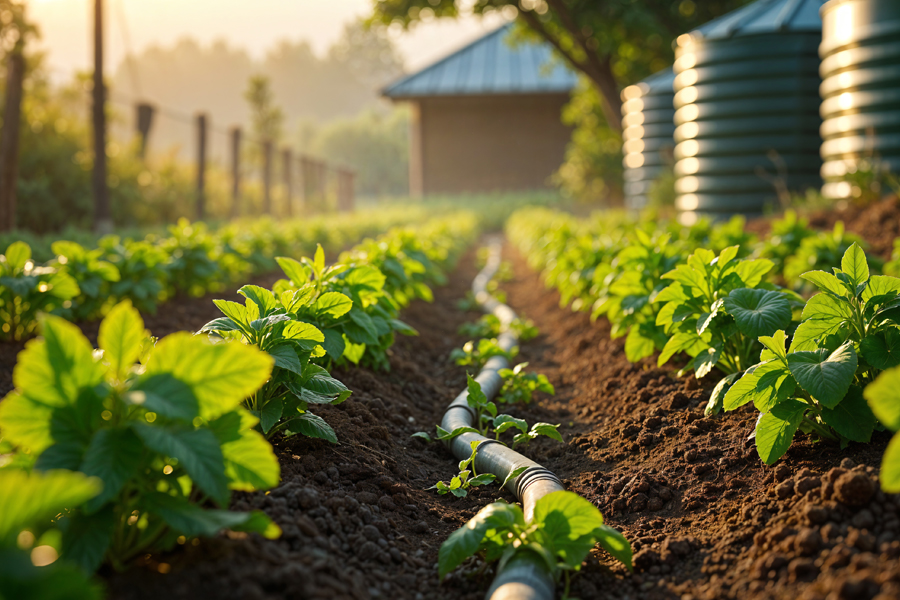
What if you could grow more crops while using significantly less water than you do today? That is not a distant possibility anymore. In 2026, drip irrigation has become one of the most transformative forces in modern agriculture, and the technology behind it is evolving at a pace that is genuinely exciting. With global freshwater scarcity projected to affect over 40% of the world's population by 2030, the pressure on farming to produce more with less has never been higher. Drip irrigation sits right at the center of that challenge. This article walks you through the biggest trends, technologies, and shifts defining the space this year.
The most significant shift happening in drip irrigation right now is the deep integration of smart technology into what were once purely mechanical systems. Soil moisture sensors, real-time weather data feeds, and AI-powered scheduling software are now working in sync to make irrigation genuinely intelligent. Instead of running on fixed timers, modern drip irrigation systems can analyze soil conditions, crop growth stages, and local microclimates to decide precisely when and how much water each zone needs. The outcome is not just water savings but healthier crops and measurably stronger yields.
Artificial intelligence is no longer a buzzword in agriculture. It is a working tool. In 2026, AI-driven irrigation scheduling platforms are pulling data from satellite imagery, local weather forecasts, and on-ground sensors to build dynamic watering plans that adapt automatically throughout the season. IoT-connected drip systems can now be monitored and controlled remotely through mobile apps, meaning you can pause irrigation during unexpected rainfall or increase flow during a sudden heat spike without stepping into the field. Research from the International Water Management Institute suggests that AI-optimized drip irrigation can reduce water consumption by up to 35% compared to conventional timer-based systems, while improving crop quality by as much as 20%. That is a compelling case for adoption at any scale.
If smart scheduling is the brain of a modern drip irrigation setup, then precision emitters are its hands. The engineering behind drip emitters has advanced considerably over the past few years. In 2026, pressure-compensating emitters have become standard in most commercial installations, delivering consistent flow rates regardless of elevation changes or pressure fluctuations across long pipe runs. What is particularly worth noting this year is the emergence of variable-rate emitters that can be adjusted through software, giving growers the ability to tailor water delivery at the level of an individual plant row.
Imagine visualizing this through an infographic showing a single field where different zones receive precisely calibrated water volumes based on soil type, crop density, and sun exposure. That level of granularity was difficult to achieve even five years ago. Today it is the direction the entire trickle irrigation industry is moving. And it does not stop above the surface either. The same precision logic is now being applied underground, and if you want to understand how that works in practice, our detailed guide on how subsurface irrigation is transforming agriculture globally is worth reading alongside this one. For high-value crops like berries, grapes, or specialty vegetables, this kind of precision directly translates into higher marketable yield and reduced loss from overwatering or uneven distribution.
The conversation around drip irrigation in 2026 is not just about efficiency. It is increasingly about responsibility. Growers, manufacturers, and policymakers are paying far more attention to the environmental footprint of irrigation infrastructure itself. Plastic drip tape and emitter components, which were once single-use, are now being replaced by more durable, recyclable, and even biodegradable alternatives. Several manufacturers have introduced emitter lines made from recycled polymers, and field trials across South Asia and the Mediterranean have shown these materials perform comparably to conventional options over a full growing season.
Alongside materials innovation, there is a growing trend toward integrating drip irrigation with water recycling and rainwater harvesting systems. Treated greywater and collected runoff are increasingly being fed directly into subsurface drip irrigation networks, reducing dependence on freshwater sources. This combination of resource-efficient delivery and responsible sourcing is becoming a defining feature of forward-thinking agricultural operations, particularly in water-stressed regions like parts of India, Israel, and the American Southwest. One thing that often goes unnoticed in these sustainability conversations, however, is the threat that builds quietly inside the system itself. Clogging, sediment buildup, and emitter failure are responsible for more crop losses than most growers realize, and if you have not read about the silent killer in drip irrigation, it is one of those reads that could save you a significant amount of money and effort this season.
For a long time, the most sophisticated drip irrigation technology was out of reach for smaller operations, both in terms of cost and technical complexity. That is changing in 2026. The decreasing cost of sensors, the broader availability of cloud-based farm management software, and the rise of modular, scalable drip systems mean that precision irrigation is no longer exclusive to large agribusinesses. A farmer working ten acres in Tamil Nadu or a family-run vineyard in Maharashtra can now access the same quality of water management tools that were once reserved for industrial-scale operations.
This democratization of technology matters deeply. It means better livelihoods for smaller growers, less pressure on already strained water resources, and more resilient food systems overall. Companies like KSNM Drip are playing a meaningful role in this shift by making reliable, high-quality drip irrigation products accessible to growers at every level, not just those with large budgets or technical teams.
Drip irrigation in 2026 is smarter, more precise, more sustainable, and more accessible than it has ever been. From AI-powered scheduling systems and advanced pressure-compensating emitters to eco-friendly materials and affordable solutions for smaller farms, the innovations happening right now are reshaping the way the world grows food. If you have been considering upgrading your irrigation setup or exploring water-efficient farming for the first time, this is genuinely the right moment to take that step. The technology is ready, the evidence is strong, and the need is real. Take a closer look at what modern drip irrigation can do for your farm, and consider reaching out to KSNM Drip to find the right system for your specific needs.





 How to Choose Betwee...
October 08, 2026
How to Choose Betwee...
October 08, 2026
 Two Decades of KSNM ...
September 02, 2026
Two Decades of KSNM ...
September 02, 2026
 Tomato Drip Irrigati...
September 02, 2026
Tomato Drip Irrigati...
September 02, 2026
 Filters in Drip Irri...
September 02, 2026
Filters in Drip Irri...
September 02, 2026
 Drum Seeder and Cono...
September 02, 2026
Drum Seeder and Cono...
September 02, 2026
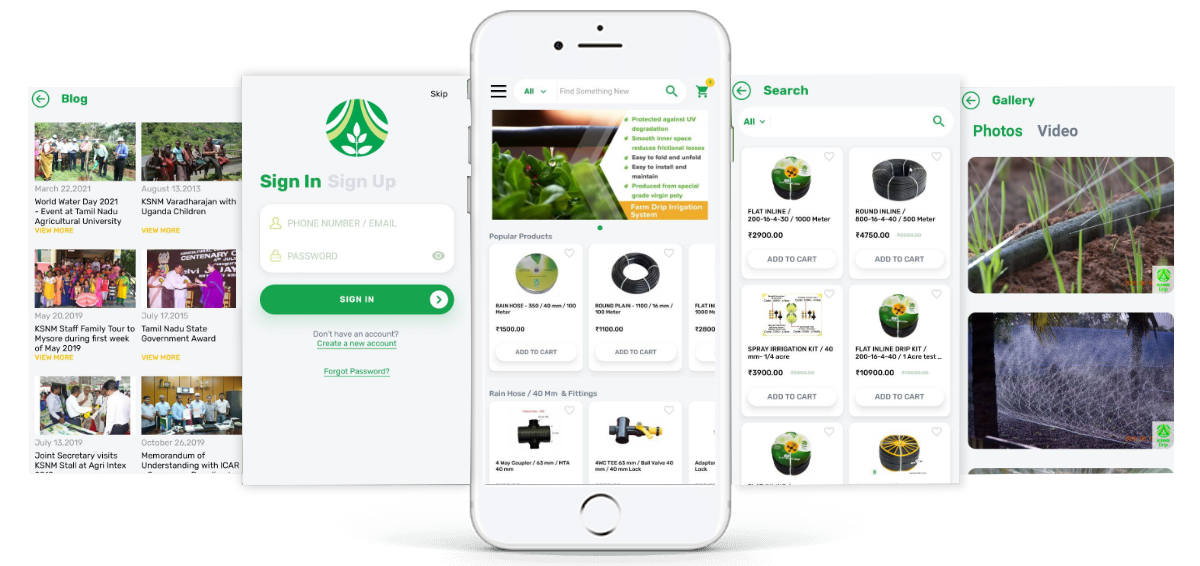
Introducing KSNM Drip’s Mobile App
Through our app’s convenience, start enjoying easy access, better experience and simple payment process. Download our App and begin your cart buying right away.


 Special offer!
 Track Order