Posted On: March 20, 2026
Posted By: KSNM Admin
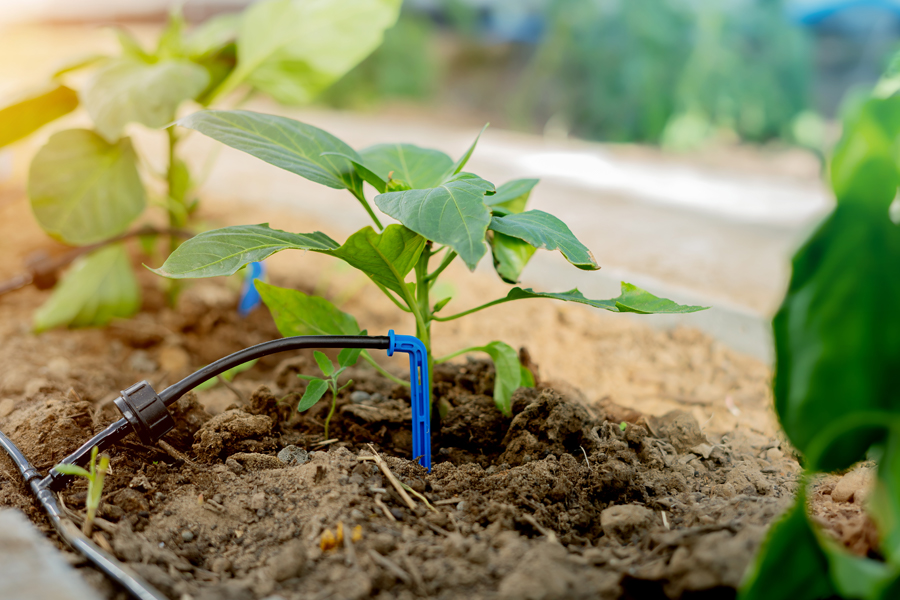
Fertigation combines fertilizer application with drip irrigation to deliver nutrients precisely where crops need them most. This guide covers the key techniques, real benefits, and why more farmers are making the switch to this smarter feeding method.
What if every rupee you spent on fertilizer actually reached your crop instead of washing away into the soil or evaporating into the air? For most conventional farming setups, a significant portion of applied nutrients never make it to the root zone at all. That is a costly problem, and fertigation through drip irrigation is one of the most effective answers to it. Fertigation is the practice of dissolving fertilizers into irrigation water and delivering them directly through a drip system to the base of each plant. It is precise, efficient, and increasingly accessible to farmers of all scales. This article walks you through how fertigation works, the techniques that make it most effective, and the real-world benefits that are convincing more growers to adopt it every season.
Fertigation is not a new concept, but its pairing with drip irrigation has elevated it into one of the most powerful tools in modern precision agriculture. In simple terms, fertigation means injecting fertilizers, whether nitrogen, phosphorus, potassium, or micronutrients, directly into the irrigation water flowing through a drip system. Instead of broadcasting fertilizer across an entire field and hoping rainfall or manual watering carries it to the roots, fertigation puts the right nutrients in the right place at the right time.
Drip irrigation is the ideal vehicle for this process because it already delivers water in a controlled, targeted manner directly to the root zone of each plant. When you add dissolved nutrients to that same water stream, you get a delivery mechanism that is both spatially precise and temporally flexible. You can feed your crops a little at a time, frequently, in sync with their actual nutritional needs at each stage of growth. This approach, often called split-dose or fractional fertigation, mirrors the way plants naturally prefer to absorb nutrients and consistently outperforms bulk fertilizer application in both uptake efficiency and crop response.
Understanding the mechanics of fertigation is one thing. Applying it well is another. There are several techniques that determine how effectively nutrients are delivered through a drip irrigation system, and choosing the right one for your crop and setup makes a meaningful difference in results.
The most widely recommended approach to fertigation through drip irrigation is the three-stage method. In the first stage, you run the drip system with plain water for roughly 20 to 30 percent of the total irrigation cycle. This wets the soil and ensures the system is running at full, stable pressure before any nutrients are introduced. In the second and longest stage, the fertilizer solution is injected into the water stream and carried through the drip lines to the root zone. This middle phase typically accounts for around 50 to 60 percent of the total cycle time. In the final stage, plain water is flushed through the system again to clear any remaining fertilizer from the pipes and emitters, preventing salt buildup and clogging.
This three-stage process is not just good agronomic practice. It also protects your drip irrigation infrastructure. Fertilizer residue left sitting in drip lines and emitters is one of the leading causes of blockage over time, and consistent flushing dramatically extends the working life of the system. If you want to understand just how damaging emitter clogging can be when it goes unnoticed, our piece on the silent killer in drip irrigation covers the subject in depth and is well worth reading before you set up any fertigation program.
Not every fertilizer is suitable for fertigation through drip irrigation. The most critical requirement is solubility. Any fertilizer introduced into a drip system must dissolve completely in water, because undissolved particles will clog emitters and disrupt flow. Fully water-soluble grades of urea, potassium nitrate, monopotassium phosphate, and calcium nitrate are among the most commonly used fertigation inputs. Liquid fertilizers and nutrient concentrates formulated specifically for drip application are also widely available and offer the convenience of easier mixing and more predictable dilution.
Equally important is understanding nutrient compatibility. Calcium and phosphate fertilizers, for example, should never be mixed together in the same solution because they react to form an insoluble precipitate that will block your drip lines. A good fertigation program maps out which nutrients are applied on which days and ensures incompatible inputs are always kept in separate injection cycles. Working with a supplier who understands both the agronomic and engineering side of drip irrigation can help you avoid these pitfalls before they cost you a season.
The case for fertigation is built on outcomes that farmers across India and globally are documenting in their own fields season after season. The benefits are not theoretical. They are measurable, practical, and financially meaningful.
To begin with, nutrient use efficiency improves dramatically when fertilizers are delivered through a drip irrigation system rather than broadcast across the soil surface. Studies from the Indian Council of Agricultural Research have shown that fertigation can improve fertilizer use efficiency by 30 to 50 percent compared to conventional application methods. That means you are either spending less on inputs for the same yield, or achieving a better yield for the same investment. Either way, the economics work in the farmer's favor.
Beyond efficiency, fertigation through drip irrigation gives you precise timing control over your crop nutrition program. You can align fertilizer applications with the specific growth stages where uptake is highest, such as vegetative expansion, flowering, or fruit fill, ensuring that nutrients are available exactly when the crop's demand peaks. This kind of stage-specific feeding is particularly valuable for high-value crops like tomatoes, chillies, bananas, and grapes, where nutritional timing has a direct and visible impact on fruit size, color, and marketable quality.
There is also a significant environmental benefit worth acknowledging. Conventional fertilizer broadcasting leads to substantial losses through surface runoff and deep percolation, both of which carry nutrients into waterways and groundwater. Fertigation through a well-managed drip irrigation system keeps nutrients concentrated in the active root zone, reducing leaching losses and lowering the overall environmental footprint of the farming operation. As regulatory pressure around fertilizer runoff increases in many Indian states, this is becoming a practical compliance consideration as much as an ethical one.
Fertigation does not exist in isolation. It is most powerful when it is part of a wider precision agriculture strategy that uses data to drive decisions about water, nutrients, and crop management together. When a drip irrigation system is equipped with soil sensors and connected to a monitoring platform, fertigation schedules can be adjusted dynamically based on real-time soil nutrient status and moisture levels rather than fixed calendars. That integration is where modern drip irrigation is heading, and fertigation is a central pillar of it.
It is also worth noting that fertigation works exceptionally well across a wide range of cropping systems, from row crops to orchards to protected cultivation in greenhouses and poly-houses. If you are curious about how drip irrigation and precision water management are being applied across different field configurations, our article on how drip irrigation is redefining row-crop farming offers a useful perspective on the versatility of these systems beyond traditional horticultural applications.
KSNM Drip works with growers who are looking to build fertigation-ready drip irrigation setups that are properly designed for the crops, soils, and water sources involved. Getting the system design right from the beginning makes a significant difference in how smoothly and effectively a fertigation program runs over the long term.
Fertigation through drip irrigation represents one of the clearest examples of doing more with less in modern agriculture. It uses the precision of a drip system to deliver not just water but complete nutrition directly to the root zone, cutting waste, improving crop response, and stretching every input further. The techniques are learnable, the benefits are proven, and the technology is accessible to farms of all sizes. If you have been applying fertilizers the conventional way and wondering why your results are inconsistent or your input costs keep climbing, fertigation is worth a serious look this season. The right drip irrigation setup, combined with a well-planned fertigation program, can change the way your crops grow and the way your farm operates.





 How to Choose Betwee...
October 08, 2026
How to Choose Betwee...
October 08, 2026
 Two Decades of KSNM ...
September 02, 2026
Two Decades of KSNM ...
September 02, 2026
 Tomato Drip Irrigati...
September 02, 2026
Tomato Drip Irrigati...
September 02, 2026
 Filters in Drip Irri...
September 02, 2026
Filters in Drip Irri...
September 02, 2026
 Drum Seeder and Cono...
September 02, 2026
Drum Seeder and Cono...
September 02, 2026

Introducing KSNM Drip’s Mobile App
Through our app’s convenience, start enjoying easy access, better experience and simple payment process. Download our App and begin your cart buying right away.


 Special offer!
 Track Order