Posted On: December 05, 2025
Posted By: KSNM DRIP
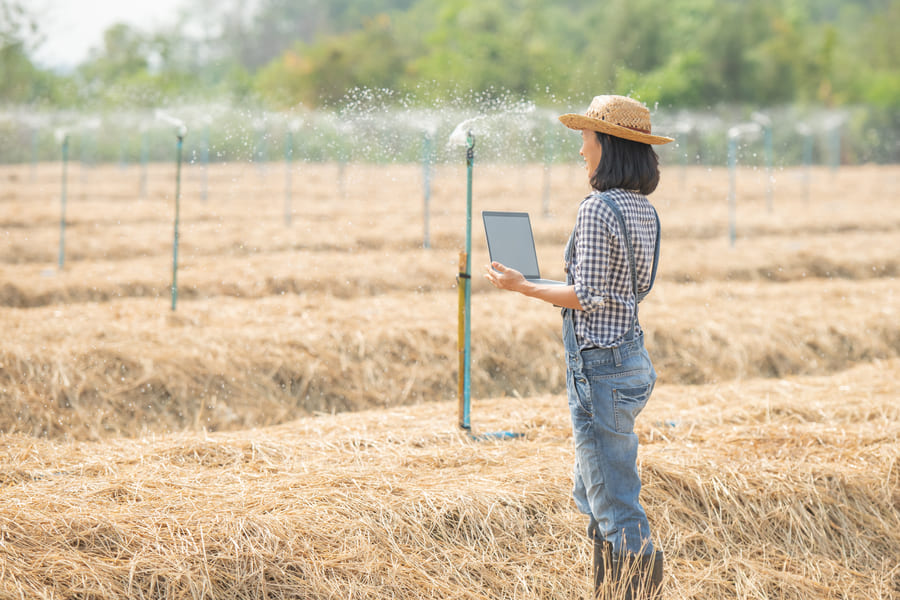
Agriculture in India is transforming faster than ever, driven by rising water scarcity, unpredictable climate patterns, and increasing demand for higher farm productivity. Traditional irrigation systems often lack precision and control, leading to water wastage, uneven crop growth, and labour dependency. As farmers move toward smarter and more efficient methods like drip irrigation, the need for automation and real-time water management becomes essential, not optional.
This shift in thinking has led to the rise of micro irrigation smart controllers, devices designed to make irrigation automatic, accurate, and data-driven. With these systems, farmers can irrigate crops based on actual need rather than guesswork.
Micro irrigation smart controllers are intelligent devices that regulate the flow and timing of irrigation systems using sensors, timers, or automation technology. Instead of manually opening valves or estimating watering schedules, the controller automates the process, ensuring crops receive the right amount of water at the right time.
Many advanced systems even monitor temperature, soil moisture, humidity, and rainfall patterns. When integrated with drip irrigation, these controllers improve precision, reduce human effort, and help farmers avoid water stress or over-watering, two common issues in conventional farming.
India faces a growing challenge: 70% of freshwater resources are used for farming, yet a significant portion is wasted due to inefficient watering practices. Smart irrigation controllers help bridge this gap by using technology to control and optimize irrigation inputs.
Here’s how they make a difference:
Unlike traditional systems, smart controllers supply only the necessary water by analyzing crop demand, soil type, and environmental conditions. For farmers already using drip irrigation, this becomes a powerful upgrade, ensuring uniform delivery without wastage.
By preventing unnecessary watering, these systems can save up to 30 to 50% water, making them especially valuable in drought-prone regions.
Manual irrigation often demands daily field visits, valve adjustments, and constant supervision. Smart controllers eliminate these tasks by automating schedules. For farmers managing multiple acres or seasonal labour challenges, this automation brings consistency and peace of mind.
Whether using timers, mobile apps, or fully automated sensor networks, smart controllers allow farmers to manage drip irrigation systems without being physically present in the field.
Plants thrive when irrigation aligns with their growth stage. Smart controllers can schedule watering cycles based on germination, flowering, or fruiting stages. This precision supports healthier root growth, better nutrient absorption, and stronger plant structure.
With consistent moisture levels and controlled irrigation intervals, crop yield can improve significantly, especially when combined with drip irrigation.
Energy usage is often overlooked in irrigation planning. Running pumps unnecessarily increases operational cost and maintenance frequency. Smart controllers run pumps only when needed, reducing electricity consumption and increasing pump life.
Over time, the system pays for itself by reducing:
Water usage
Electricity consumption
Labour cost
Crop loss due to improper watering
Smart controllers generally fall into three categories based on how they operate:
These operate on pre-set schedules and are ideal for farms where weather patterns and water requirements are predictable. They are simple, affordable, and commonly paired with small-scale drip irrigation systems.
These systems use soil moisture, rainfall, and weather sensors to determine irrigation timing. They adapt automatically to environmental conditions and prevent unnecessary watering after rain or when soil moisture is sufficient.
The most advanced category uses real-time data, mobile monitoring, and automated decision-making. Farmers can remotely control irrigation using smartphone apps, making it easy to manage extensive drip irrigation systems with accuracy and flexibility.
Micro irrigation smart controllers are ideal for:
Orchards and vineyards
Horticulture farms
Greenhouses and polyhouses
Vegetable cultivation
Sugarcane, paddy nurseries, and plantation crops
Multi-acre farms using drip irrigation
Whether a farm is small or large, automation brings measurable benefits.
As India progresses toward water-efficient agriculture, smart controllers play a key role in long-term sustainability. By preventing water wastage and increasing field efficiency, they help farmers conserve resources, reduce carbon footprint, and adopt climate-smart agriculture practices. This evolution ensures that every drop of water is used carefully, making drip irrigation more future-ready and resilient.
Micro irrigation smart controllers are reshaping farming by combining technology, efficiency, and precision. With automated water scheduling, reduced labour dependency, and enhanced crop performance, they help farmers achieve more with less effort and fewer resources.
As water scarcity continues to challenge agriculture, pairing smart controllers with drip irrigation creates a system that is efficient, cost-effective, and built for the future. The journey toward smarter farming has already begun and smart controllers are becoming an essential part of it.





 Drum Seeder and Cono...
September 02, 2026
Drum Seeder and Cono...
September 02, 2026
 Jasmine and Marigold...
August 27, 2026
Jasmine and Marigold...
August 27, 2026
 Understanding KSNM's...
August 20, 2026
Understanding KSNM's...
August 20, 2026
 Water Crisis 2026: W...
August 06, 2026
Water Crisis 2026: W...
August 06, 2026
 Cotton Drip Irrigati...
August 13, 2026
Cotton Drip Irrigati...
August 13, 2026
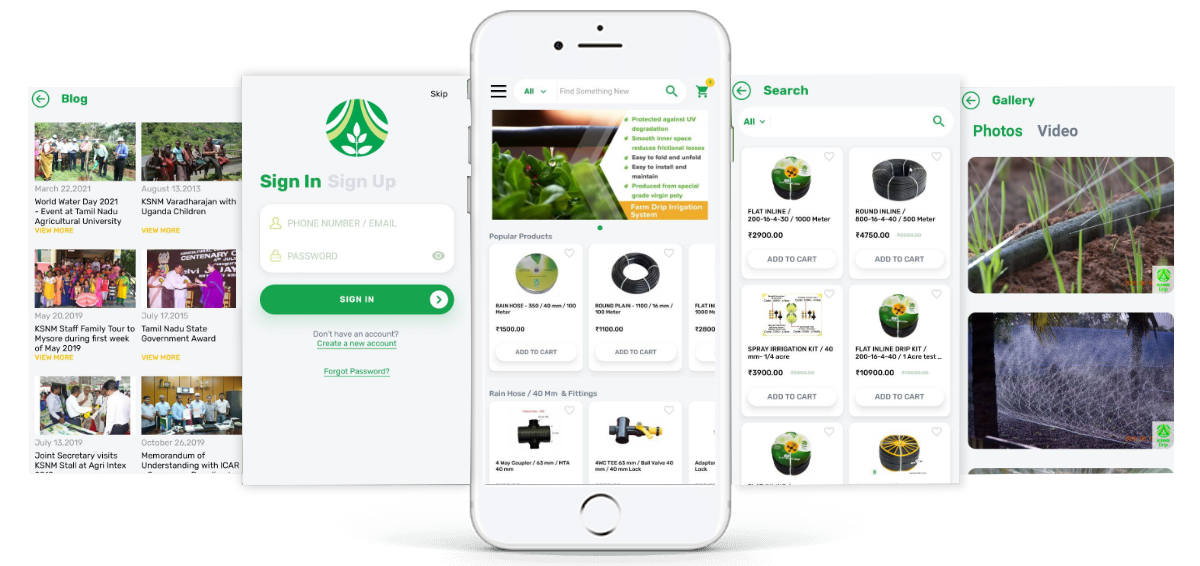
Introducing KSNM Drip’s Mobile App
Through our app’s convenience, start enjoying easy access, better experience and simple payment process. Download our App and begin your cart buying right away.


 Special offer!
 Track Order